GHK-Cu Microneedling: How to Microneedle GHK-Cu to Safely Maximize Results
Discovering the potential of GHK-Cu microneedling changes the way you think about skincare or haircare. Most people who use copper peptides assume applying a serum topically, every day, is all it takes to see the results they have been sold on. That’s not always the case, though.
The skin’s barrier serves a really important purpose: keeping things out, while locking moisture in. Sometimes, it does its job too well. Hydrophilic molecules like GHK-Cu cannot penetrate properly. The deeper tissue that actually needs this copper peptide never gets it. Then people wonder why progress is so slow, or perhaps even nonexistent.
This is why it may be worth trying microneedling with GHK-Cu. Studies have shown that microneedle pretreatment allowed more of the good stuff to make its way through the skin barrier and into the areas that needed it most.1 Translation: better results, faster.
There’s a fine line, though, as far as needle depth and frequency go. You don’t want to cause more harm than good. That’s why we put together this guide on how to microneedle GHK-Cu safely. Stock up on the #1 GHK-Cu serum today and learn how to make the most of it below!
Key Takeaways
- GHK-Cu is a proven copper peptide for skin firmness and hair density.
- Microneedling can dramatically improve how much GHK-Cu absorbs through the skin barrier.
- Needle depth between 0.25mm and 0.5mm is best for at-home sessions.
- Give the skin time to recover. Microneedling 2-3 times a week is usually plenty.
- Serum purity is of the utmost importance, so don’t settle for less than the best GHK-Cu product.
- You should still expect to wait 6-8 weeks before noticing visible improvements in skin and hair.
What Does GHK-Cu Microneedling Entail?
There are two sides of the GHK-Cu microneedling conversation - the peptide itself, and the dermaroller. Let’s start with the first half.
GHK-Cu has five decades of research on its own. We’ve known about the potential of this peptide since the 1970s. It naturally occurs in human blood plasma, but you have less and less of it the older you get. This is why it’s worth adding a GHK-Cu serum into your skincare or hair care routine.
The GHK-Cu benefits are plentiful. It appears to modulate more than 4,000 human genes, including those tied to tissue repair and maintaining the extracellular matrix.2 People use GHK-Cu for firmer-looking skin, fine-line reduction, and wound recovery. Others rely on it to produce thicker, healthier-looking hair.
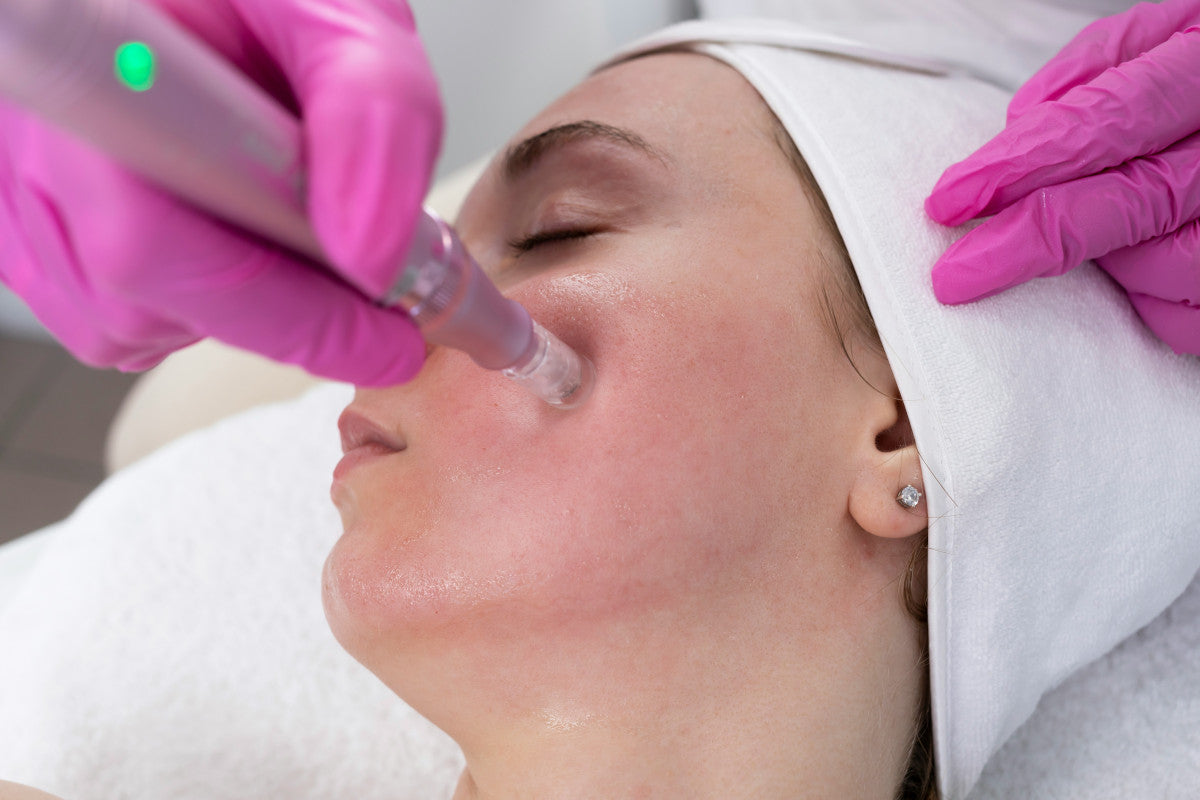
But the challenge with copper peptides has always been delivery. Absorption can be a little underwhelming. That’s where microneedling comes into play. This is a tactic where you roll a device with ultra-fine needles over the skin (be it the face or scalp) to create tiny little injuries. It’s not debilitating pain. It’s certainly uncomfortable, though. So what’s the point?
Those microinjuries do two things: First, they force the skin to mount its wound-healing response. That boosts collagen signaling and cellular turnover. But the microscopic punctures also open the door to let GHK-Cu make its way through the skin barrier.
Why Combine Microneedling With GHK-Cu?
It sounds a little dramatic. But it works. There are two reasons you should try microneedling with GHK-Cu if you’re serious about adding this peptide to your protocol: absorption and synergy.
The case for better absorption is super straightforward. GHK-Cu is a hydrophilic tripeptide - meaning it loves water. Water-loving molecules have a hard time making their way through the lipid-rich skin barrier.
One study in 2015 found that almost zero peptide crossed intact human skin. On the other hand, 134 nanomoles made it through microneedled skin under the exact same conditions!1 This dramatically improves the efficiency of your serum.
The synergy case is a little less obvious, but we feel it is just as important. Microneedling isn’t dangerous by any means, but it does stir up your body’s natural wound healing response. Your skin detects these micro-injuries and ramps up collagen production and tissue remodeling processes. GHK-Cu is a well-documented signal peptide involved in BOTH of those things.2
Thus, combining GHK-Cu and microneedling means the peptide gets in the tissue at the same time the skin’s repair signals are already activated. Think about it this way: dermarolling opens the door so the peptide can walk straight through it, where it begins supporting processes that are already underway.
How to Microneedle GHK-Cu: Step-by-Step Guide
The last thing you want to do is cause more harm than good. Here’s how to microneedle GHK-Cu safely so you can tap into all the extra benefits without the downside of stressing your skin too much - or worse, developing an infection.
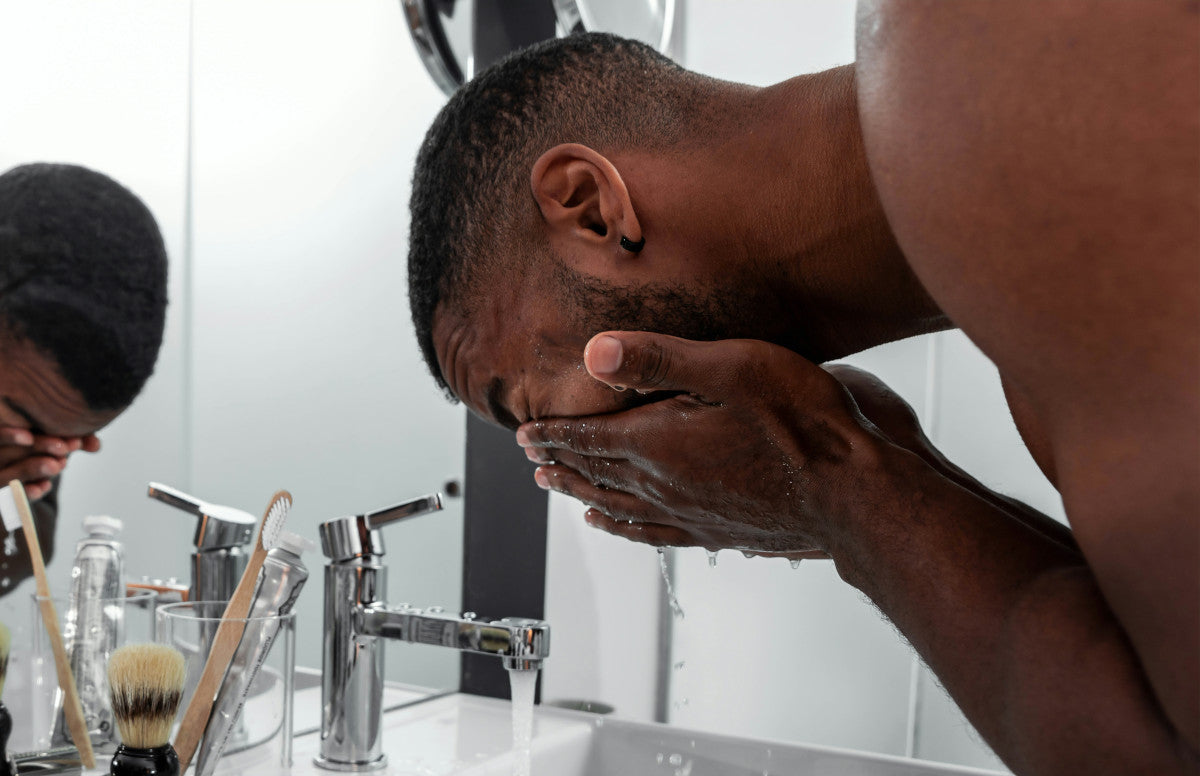
Step 1) Clean the Skin and Device
You still need a blank slate for microneedling and GHK-Cu to work effectively. Start with a gentle cleanser and get any dirt, oil, and makeup off the skin. Pat dry and sanitize your microneedling device (we use 70% isopropyl alcohol). Let it air dry completely.
This step shouldn’t be taken lightly. You’re going to create open channels in your skin. Anything on the skin’s surface or the device gets easy access to come on in.
Step 2) Microneedle in Sections
There are two schools of thought with GHK-Cu microneedling. We believe that microneedling should come first, THEN you apply the serum. Others say you should microneedle after applying the serum. Either way technically works.
But we think about it like aerating a lawn. You want to open up the tiny little holes so the fertilizer (or in this case, the copper peptide serum) can easily work into the soil (your skin) where it actually needs to go.
Whatever you decide on, we find it’s best to work in sections:
- Cheeks
- Forehead
- Jawline
- Neck
Roll or stamp in one direction with 4-6 passes per area. DO NOT scrub back and forth. Use light, yet consistent pressure. The needles are doing all the work. If you see your skin bleeding, you probably pressed too hard or went over the same area too many times.
Step 3) Apply Your GHK-Cu Serum
A little goes a long way. Just put 2-3 drops on your skin or on your fingertips and massage the skin. The serum will easily work into your skin and get into the deeper layers where it’s needed.
Now What?
GHK-Cu does layer nicely with other active ingredients, but we think it’s best to skip the rest of your routine post-microneedling. Vitamin C, retinol, exfoliating acids, and heavy moisturizers should be saved for the next day instead. The simpler your routine, the better. At least for the first 12-24 hours.
Choosing the Right Microneedler For GHK-Cu
Whether it’s our GHK-Cu face serum or hair serum, you’ll find the right product for your regimen here at PLU Laboratories. But picking the optimal microneedling device is a little trickier.
Why Depth Matters
Needle depth dictates which specific layer of the skin you can reach. 0.25mm needles only penetrate the epidermis. They reach the upper dermis at 0.5mm, though. Anything at 1.0mm and higher is not for personal use. This requires professional training and oversight.
The study we looked at earlier showing the benefits of GHK-Cu microneedling specifically used microneedles that created sufficient channels for peptide transport without damaging deeper structures - so you shouldn’t need anything more than 0.25-0.5mm needles.
It’s a common misconception that longer needles translate to getting GHK-Cu to the target cells with a higher rate of success. It does, however, mean more tissue disruption, longer recovery, and a higher risk of infection/scarring.
There are adjustable-depth dermapens out there if you want to dial in the exact depth per session. You can start with 0.25mm depth and eventually work up to 0.5mm depth as you get used to dermarolling.
Are Dermarollers and Dermapens the Same Thing?
You’ll see a few terms tossed around as it pertains to microneedling with GHK-Cu - dermaroller and dermapen. They’re actually NOT the same thing.
Dermarollers have a cylindrical head covered in needles that quite literally roll across the skin. Dermapens have a motorized cartridge that stamps needles into the skin vertically. They are quite similar as far as the end result is concerned but they’re distinct.
Rollers drag needles at an angle, which can lead to wider entry points and more surface trauma than is necessary. Pens put needles straight into the skin and pull them right back out. Deeper channels, less surrounding damage.
As you can imagine, dermapens cost more than their dermaroller counterparts. It’s up to you to decide if it’s worth paying a premium for a pen or if you’d rather get started microneedling with a dermaroller.
How Often Should You Microneedle GHK-Cu?
GHK-Cu microneedling isn’t something you do every night. But there’s no one-size-fits-all answer regarding how often you should do it, because it depends on needle depth.
We prefer to use a 0.25mm needle, which is pretty short in the context of microneedling with GHK-Cu. The reason we like it is that it causes minimal disruption, so you can microneedle more often. We use our 0.25mm microneedle device every 2-3 days.
You may see 0.5mm microneedle tools out there. These obviously work deeper into the skin to stimulate a stronger healing response, but they also cause more discomfort and need more recovery time between sessions. You only need to use one of these every 7-10 days.
We DO NOT recommend going beyond a 0.5mm device for at-home microneedling. You shouldn’t fall into the trap of thinking more is better with microneedling and GHK-Cu, either. Your skin needs time to fully wrap up its healing cycle between sessions. Rushing it cuts that healing process short before the collagen remodeling is finished, so the skin has to start back over.
Now, you should continue to apply your GHK-Cu serum every day between microneedling sessions. Consistency is key with copper peptides. Once a day is the bare minimum. Many customers do it twice a day!
You’ll know you’re microneedling too often if your skin stays red or sensitive for more than 48 hours after microneedling with GHK-Cu. Add another day between sessions and see if that helps.
GHK-Cu Microneedling For Hair Growth Specifically
Maybe you’re here to learn about GHK-Cu hair growth specifically. In that case, GHK-Cu microneedling can be incredibly powerful. The skin on your scalp is especially hard to penetrate with a hydrophilic serum, so opening up those channels can dramatically improve absorption.
However, that thicker skin on your scalp also means the microneedling procedure will feel a little different. But it doesn’t mean you should go beyond the 0.25-0.5mm microneedling depth we recommend.
Part your hair into sections to fully expose the scalp. You can roll the device over hair, but you may be blocking the needles from completely accessing certain areas. Work along each part line with light pressure. Apply the serum after microneedling and massage your scalp for 1-2 minutes to maximize absorption.
The results from microneedling and GHK-Cu can be pretty impressive. But it’s so important that you set yourself up for success with the right GHK-Cu hair serum and use it daily. Speaking of which…
Picking the Right GHK-Cu Serum
Your routine is only as good as the serum you use. The best protocol with the ideal dermaroller/dermapen means nothing if the GHK-Cu is underformulated, or crowded out by other filler ingredients.
Board certified dermatologist Dr. Marisa Garshick says that product quality is a massive concern in the copper peptide space. “Whether or not it's even a copper peptide is always a concern.”3
The good news is you don’t have to play the guessing game as to whether or not a product belongs in your protocol. These are the things you need to look at before buying anything.
Why Concentration is So Important
Don’t just settle for any serum with GHK-Cu on the label. Dig deeper and find out what’s actually inside it. So many brands sell weak serums with less GHK-Cu than they’d ever admit. Any brand that doesn’t disclose concentration is likely hiding something.
We sell our serums with 1% GHK-Cu, which aligns with what you’ll see in published research on copper peptides. We have strict lab-testing standards in place, too, confirming that what’s on the label is what’s inside the bottle.
Complementary Ingredients to Look For
GHK-Cu isn’t the only peptide worth adding to your skincare or hair care routine. There are actually other peptides we include in our serums because they work so well synergistically.
For example, Palmitoyl Peptides appear to improve skin texture and firmness through a totally distinct signaling pathway from GHK-Cu. Combining these peptides with GHK-Cu can provide more well-rounded support.
Similarly, Acetyl Tetrapeptide-3 supports the structural proteins that anchor follicles during the growth phase. In other words, it helps keep more hair rooted in the scalp, so you shed less.
What SHOULDN’T Be on the Label
The best GHK-Cu serum for microneedling doesn’t have a dozen ingredients. Or 30 ingredients, for that matter. Yet, so many brands create these formulas with countless ingredients and will tell you it’s because they want to make the most “well-rounded” formula.
We take the opposite approach so that copper peptides can work their magic without anything else getting in the way. Steer clear of anything containing dye, fragrance, parabens, or botanical extracts that only hold the GHK-Cu back.
Pick Up PLU Laboratories Face or Hair Serum Today!
Our GHK-Cu Face Serum and Hair Tonic are meant to be used on different parts of the body, but they’re similar in the sense that we refuse to cut corners in formulation. You get proven peptides with nothing else crowding the bottle.
Each formula undergoes strict LC-MS verification at the University of Illinois at Chicago's Mass Spectrometry Core to confirm peptide concentrations at or above label claim. Shop with peace of mind today.
Common Mistakes We See With GHK-Cu and Microneedling
There are a few things we want to warn you against before you get started with your GHK-Cu microneedling routine. These are the mistakes we’ve seen made time and time again:
- Microneedling too frequently: We get it. You’re excited to see progress, and you assume that the more often you microneedle, the faster you’ll see results. Not the case. You’re only holding yourself back by not waiting long enough between sessions.
- Pressing too hard: Same idea. People assume more pressure = getting deeper into the skin, and thus, allowing the serum that follows to penetrate further into the dermis. But this will just cause pain and exacerbate damage.
- Using the wrong serum: Anything with fragrance, alcohol, dyes, or active acids DOES NOT belong on skin that has just been microneedled. Stick with a formula from PLU Laboratories for peace of mind.
- Skipping sanitation: Even if it’s only you using the microneedling device, it’s going to touch open wounds. The stakes are too high to neglect post-session sanitation protocols. Storing a dirty device just invites bacteria into broken skin.
- Expecting overnight results: Microneedling with GHK-Cu can lead to faster progress. But that doesn’t mean overnight progress. Collagen remodeling takes weeks or months, not days. Patience is a virtue.
Setting Expectations for Results When Microneedling With GHK-Cu
So just how much faster will GHK-Cu microneedling lead you to the promised land? Here’s what you can expect:
- Weeks 1-2: You won’t really notice anything at this point. But you’re laying the groundwork.
- Weeks 3-4: Some people see their skin’s texture starting to change. It may already feel plumper and smoother.
- Weeks 5-8: This is when the real meaningful progress begins to show, be it your face or scalp you’re microneedling with GHK-Cu. Thicker-looking hair, firmer-feeling skin - you know you’re on the right track by now.
- After 8 weeks: The results continue to compound the longer you stick with your routine. People who have used GHK-Cu and microneedling for years wish they’d found it sooner.
These timelines are possible with consistent use. Skipping sessions, changing serums, or microneedling without ample recovery time are going to slow things down and leave you wondering why you aren’t seeing the same transformation others did.
So, follow all the advice we laid out in this guide to GHK-Cu microneedling and get started!

PLU Laboratories
The direct route to firmer-looking skin
Just 6 ingredients. 1% GHK-Cu with Palmitoyl Tripeptide-1 and Palmitoyl Tetrapeptide-7
Shop GHK-Cu Face TonicFrequently Asked Questions
Can you microneedle GHK-Cu?
Yes, and you should! Published research has shown that it can support better delivery of the copper peptide, potentially leading to faster progress and more impressive results.
Can I use GHK-Cu serum after microneedling, or is it the other way around?
We prefer to use the serum after microneedling. Some people apply the serum first and then microneedle. They follow up with a second application after that. This is a longer, more complicated routine that leads to using more product as well. We’re not convinced it leads to better results, though. We recommend microneedling first, then applying the serum.
What’s the ideal depth for microneedling GHK-Cu?
0.25-0.5mm is plenty for an at-home protocol. Anything more than that requires professional training, as it could lead to more dramatic skin disruption.
How frequently should I use my microneedling device with GHK-Cu?
Every 2-3 days if you are using a 0.25mm microneedling device. Once a week if you’re using a 0.5mm microneedling device. Don’t fall into the trap of assuming more frequent microneedling leads to better results. That recovery time between sessions is so important!
Will GHK-Cu microneedling improve hair growth results?
It certainly can, according to research. The scalp is thicker and thus has a lower absorption rate for hydrophilic serums like our GHK-Cu Hair Tonic. Creating tiny channels for the serum to penetrate can have a dramatic effect on your results.
How does microneedling compare to PRP?
It’s very different. PRP (platelet-rich plasma) involves drawing blood, processing it, and putting it back into the treatment area - which is usually the scalp where hair is shedding, wrinkles on the face, or stretch marks. It’s something you do in a professional setting with much more downtime, and it can cost as much as $1,500 per session (with multiple sessions needed). GHK-Cu microneedling is something you can do at home for a fraction of the price.
What’s the optimal concentration of GHK-Cu?
1%. Serums that don’t disclose concentration are more than likely underformulated, and the brand is hoping you won’t ask about it. The formula should be verified by an independent source. For example, we conduct independent LC-MS analysis at the University of Illinois at Chicago.
Final Words on GHK-Cu and Microneedling
We hope this guide on GHK-Cu microneedling has left you feeling clear and confident about your next steps. This can be a powerful way to maximize absorption of your serum and thus get better results faster.
So, what are you waiting for? The sooner you get started, the sooner you’ll see the early signs of progress. Set yourself up for success in microneedling with GHK-Cu by shopping at PLU Laboratories today.
References
- Li Y, et al. Microneedle-Mediated Delivery of Copper Peptide Through Skin. Pharm Res. 2015;32(8):2678-89. PubMed
- Pickart LV, Margolina A. Regenerative and Protective Actions of the GHK-Cu Peptide in the Light of the New Gene Data. Int J Mol Sci. 2018;19(7):1987. PubMed
- Garshick M. quoted in "The copper peptide trend has gone from creams to injections — ahead of the science." NPR. September 7, 2026. NPR

Written by Product Team