Copper Peptides vs Retinol: Can You Use Copper Peptides With Retinol?
Most skincare routines treat copper peptides and retinol as an either-or decision - pick the peptide or pick the retinoid, but don't mix them. That advice is outdated. Copper peptides vs retinol isn't really a competition. They actually work better together than separately.
Wait, can you use copper peptides with retinol? Yes, and we're going to show you how YOU can enjoy the best of both worlds and bring them into the same skincare regimen. We recommend using them on alternating nights so they can work their magic without getting in the ay of one another.
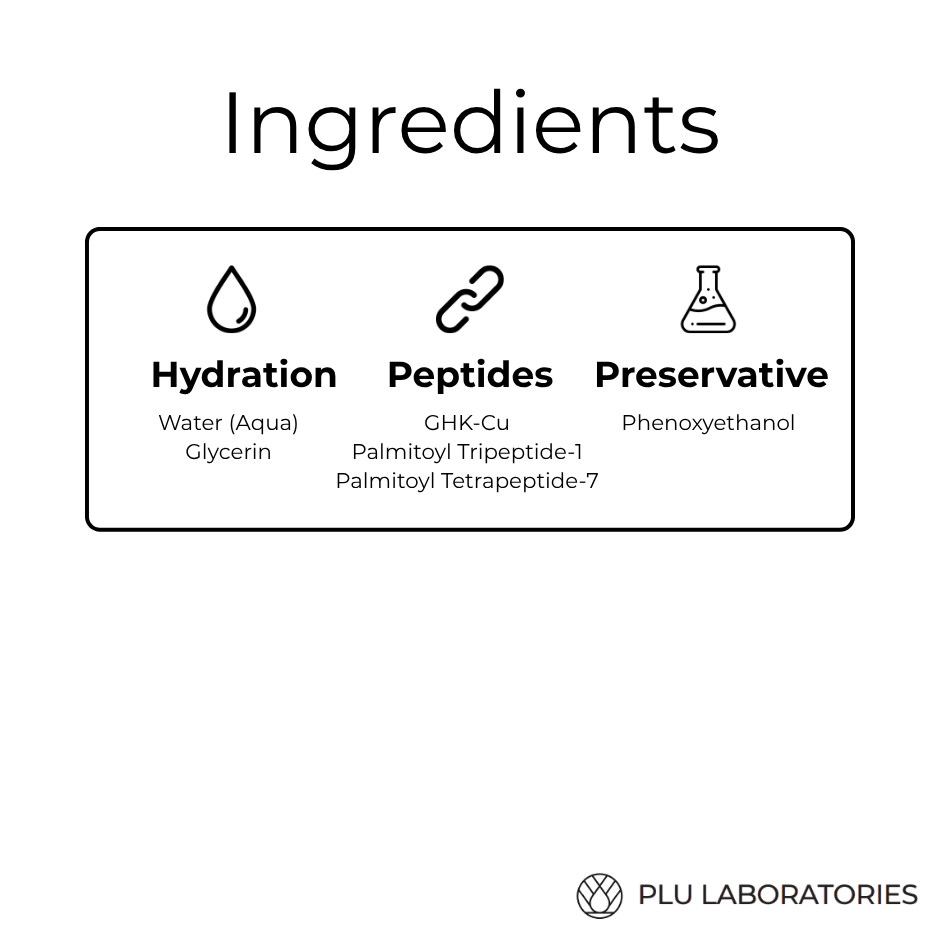
Retinol speeds up skin cell turnover while copper peptides support skin firmness and texture from the signaling side. We make it easy to elevate your skincare regimen with our copper peptide serum. It pairs 1% GHK-Cu with Palmitoyl Tripeptide-1 and Palmitoyl Tetrapeptide-7 at meaningful concentrations. Learn more below!
Copper Peptides vs Retinol (Quick Comparison)
| Category | Copper Peptides (GHK-Cu) | Retinol |
|---|---|---|
| Type | Signal peptide (naturally occurring) | Vitamin A derivative |
| Primary Function | Supports skin firmness and texture appearance | Accelerates cell turnover |
| Irritation Risk | Very low | Moderate to high, especially early on |
| Sun Sensitivity | No increase | Yes - daily SPF required |
| Sensitive Skin | Well tolerated | Often problematic |
| Delivery | Topical serum | Cream, serum, or prescription |
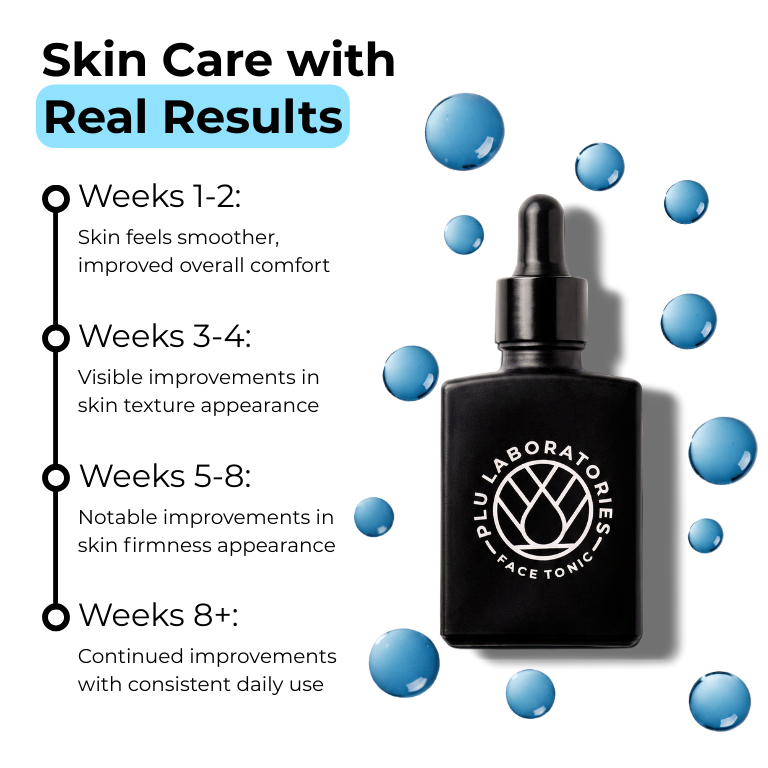
| Results Timeline | 6-8 weeks | 8-12 weeks |
What Do Copper Peptides Do?
GHK-Cu is three amino acids bonded to a copper ion. Your body already makes it. But, blood levels tank with age. You only have about a third of what you had at 20 by the time you turn 60. No wonder you start to notice the signs of aging in your skin first!
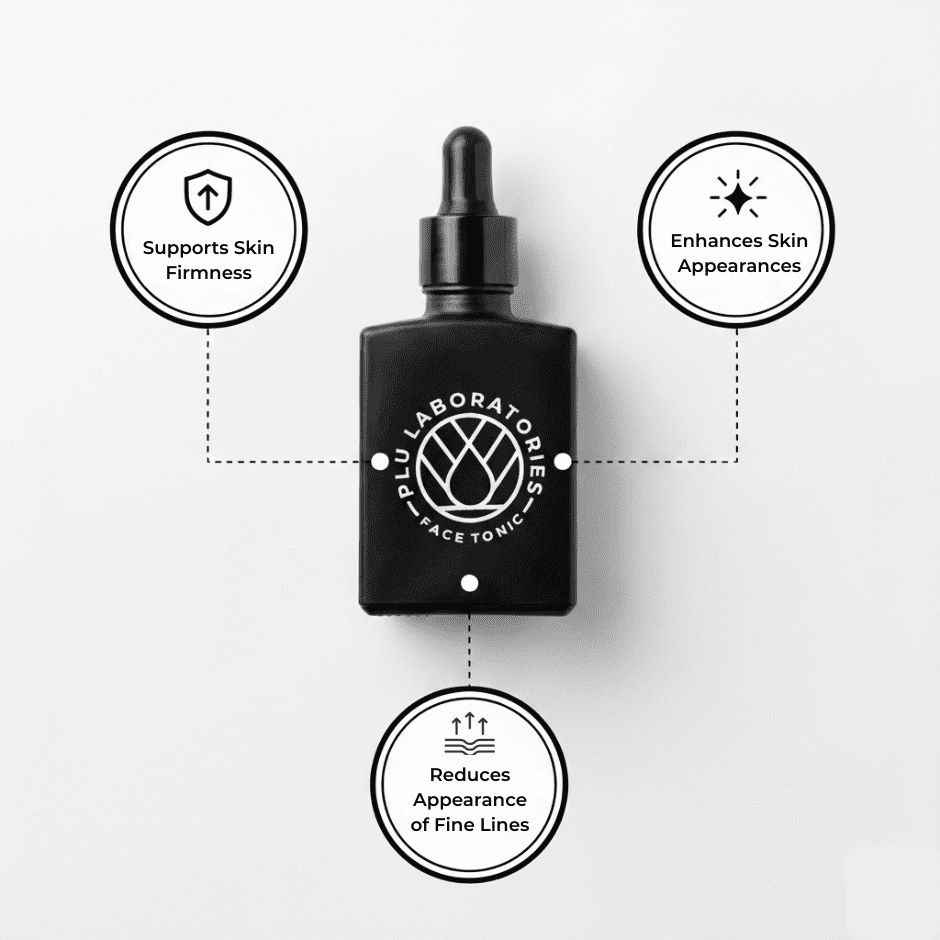
The published literature has explored the impact of copper peptides on firmness, texture, and the appearance of fine lines. GHK-Cu is a signal peptide. That means it just talks with skin cells to support their natural renewal processes instead of stripping, peeling, or forcing cell turnover.
PLU Face Tonic is a palmitoyl peptide serum featuring 1% GHK-Cu and palmitoyl tripeptide-1 and palmitoyl tetrapeptide-7. It's an intentionally simple formula so your skin gets all the good stuff with no filler getting in the way of results.
Completely different lane from retinol, which is why the copper peptides and retinol pairing works instead of canceling out. More on that in a moment. First, let's explain what exactly the other half of the copper peptides vs retinol comparison actually does.
What Does Retinol Do?
Retinol is vitamin A. Your skin converts it to retinoic acid, and its main benefit is speeding up cell turnover. In other words, dead cells shed faster so newer cells come to the surface sooner.
Nobody loves the retinol ramp-up, though. Peeling, dryness, redness, sun sensitivity that doesn't let up for weeks. Some people quit within the first month. The ones who push through usually see results around 8-12 weeks, but those early weeks are rough!
Prescription tretinoin hits harder than OTC retinol, although they work pretty similarly. Most people start with a low-concentration OTC version and work up from there. You can compare GHK-Cu vs tretinoin in our blog if you're curious.
Most people looking at copper peptides already use retinol and want something productive for the nights they skip it. So, are these two skincare superheroes compatible? Or, should you be choosing BETWEEN copper peptides vs retinol?
Everything you need, nothing you don't
Just 6 ingredients. 1% GHK-Cu + palmitoyl tripeptide-1 and palmitoyl tetrapeptide-7
Copper Peptides vs Retinol: Side-by-Side Comparison
Honestly, these ingredients play really nicely together. But it helps to understand where they overlap and diverge before adding copper peptides and retinol to your regimen. Let's look at some of the benefits each brings to your skincare routine:
Aging Support
Both have published research for fine lines, but they go about it completely differently. Retinol forces cell turnover so newer skin surfaces faster. It's more aggressive. Copper peptides ask the skin nicely to firm up without stripping anything away.
So you are likely to end up getting the same results, but the journey there looks different.
Using copper peptides and retinol on different schedules covers both angles, rather than stacking irritation on top of irritation - that's what happens when you pair retinol with another exfoliant instead.
Acne Control
Retinol has decades of evidence for clearing congested pores through faster turnover. Copper peptides don't address acne - they aren't meant to. Retinol and copper peptides serve completely different purposes here. Retinol handles the breakouts, copper peptides handle firmness and texture on different nights.
Sensitive Skin
Copper peptides vs retinol for reactive skin isn't close. Retinol's adjustment period means committing to weeks of peeling and redness before your skin gives in. This is the most common complaint you'll find in any retinol thread.
On the other hand, GHK-Cu skips all of that. There's no purging phase, barely any irritation risk, and it doesn't bump up your sun sensitivity. Copper peptides are the firmness alternative without conditions attached for skin that genuinely cannot tolerate retinol at any concentration.
If retinol at 0.25% still leaves you raw, stop fighting it. Upgrade to copper peptides and give your skin the active support it needs without putting yourself through hell with discomfort and irritation. Speaking of which…
Possible Side Effects
Retinol makes your skin peel and dry out for weeks before things get better, and you'll be way more sensitive to the sun as long as you use it. These are well-established side effects.
Copper peptides cause some occasional mild irritation at the application site. But even that is rare. Our serum is incredibly gentle, and honestly, we've had customers tell us that using copper peptides helps offset some of the irritation that harsher actives cause!
That tolerability gap is exactly why people keep asking, can you use copper peptides WITH retinol? You're in luck if you want retinol results without burning through your skin barrier every night…
Can You Use Copper Peptides With Retinol?
Yes. The concern traces back to an idea that copper ions destabilize retinol on direct contact. True, but nobody said you have to apply them at the same time. Separate them by a few hours - morning copper peptides, evening retinol, or alternating nights.
What makes using copper peptides and retinol together so powerful isn't just safety. It's coverage. Turnover from the retinol side, firmness signaling from the peptide side. Your skin gets two distinct benefits instead of the same mechanism twice.
Using copper peptides on retinol off-nights supports the type of skin signaling that increases firmness appearance. You're doing it from a completely different direction while the retinol side recovers, too. Two systems running on different nights to bring out the best in your skin.
Order matters, though…
Do You Use Copper Peptides Before or After Retinol?
Don't overthink copper peptides before or after retinol. Timing > sequence. Here are some tips on using copper peptides with retinol for the best of both worlds.
General Guidelines on Layering
Simplest approach: copper peptides in the morning, retinol before bed. No overlap, waiting, or stressing about the timing between steps.
If you MUST layer them on the same night, our advice is copper peptides first, wait 15-20 minutes, then retinol. This works if you want everything in one session, but the AM/PM split is cleaner and removes any interaction questions.
You could also alternate nights if using retinol more than twice a week wrecks your skin. That means copper peptides one evening, retinol the next. Then repeat. Sensitive skin usually settles into the alternating schedule and stays there.
SPF every morning is mandatory when retinol is in the rotation, regardless of what else you're using.
More Tips on Making the Most of Copper Peptides and Retinol Together
New to retinol? Start at 2-3 nights a week and fill the gaps with copper peptides. You get both working without going from zero to nightly retinol. That insensitivity and frequency is where most people's skin falls apart. Redness or tightness creeping in? Pull back retinol frequency. The irritation isn't coming from the peptide side of things.
Skip layering copper peptides with AHAs, BHAs, or low-pH vitamin C in the same application step, too. Just like retinol, the acidity destabilizes peptide bonds. Retinol at a different time of day is fine. Give the routine 6-8 weeks before judging results either way. Patience is everything with skincare.
Still deciding on copper peptides before or after retinol? Go with AM/PM. Our copper peptides for skin absorb in under 30 seconds and go on before SPF without any residue. Order today and bring out a more youthful appearance!
PLU Laboratories
6 ingredients. 3 actives. No fillers
Everything you need for firmer-looking skin, nothing you don't
Shop GHK-Cu Face TonicClosing Thoughts on Using Copper Peptides and Retinol Together
Your retinol is already handling cell turnover. Adding copper peptides covers ground it can't reach - firmness and texture signaling without additional irritation. So, can you use copper peptides with retinol? Yes, and your routine covers more ground when you stop treating them as either-or.
All that's left to do is get your hands on the best copper peptide serum, and your search ends here at PLU Laboratories. You get the concentrations the published literature actually used: 1% GHK-Cu, paired with Palmitoyl Tripeptide-1 and Palmitoyl Tetrapeptide-7. Three active peptides, three carriers in the bottle - nothing else.
You can also round out your beauty ritual with our copper peptides for hair. This serum brings the same GHK-Cu benefits to your hair's density and texture. Free shipping on every order, 40% off your first subscription. Shop now and see what copper peptides can do for YOU.

PLU Laboratories
Everything you need, nothing you don't
Just 6 ingredients. GHK-Cu, Palmitoyl Tripeptide-1, and Palmitoyl Tetrapeptide-7 at meaningful concentrations
Shop GHK-Cu Face TonicRelated Resources
GHK-Cu topical vs injection | AHK-Cu vs GHK-Cu
Frequently asked questions
Are copper peptides as effective as retinol?
Different tools for different jobs. Retinol is stronger for cell turnover and acne. Copper peptides are used for firmness and texture. They work for people whose skin can't handle retinol. Copper peptides vs retinol depends on what you're actually trying to fix in the first place.
Can you use copper peptides and retinol together?
Yes. Morning and evening, or alternating nights. Don't layer them in the same step and you're good.
What shouldn't be mixed with peptides?
High-concentration AHAs, BHAs, and low-pH vitamin C. Acidity breaks peptide bonds. Retinol is fine as long as you separate the application by time.
Which is better for wrinkles, retinol or copper peptides?
Retinol has more evidence for visible wrinkle reduction. Copper peptides support firmer-looking skin through signaling. It's gentler, but less dramatic on wrinkles specifically. Using both on different nights covers the most ground.
Are peptides a retinol replacement?
Copper peptides are the strongest alternative for firmness and texture appearance if you are someone who genuinely can't use retinol. Everyone else should use both in their ritual.
What's the proper order for using copper peptides and retinol together?
Copper peptides morning, retinol evening. The copper peptides before or after retinol question really just comes down to giving each its own time slot - AM/PM takes all the guesswork out of that.

Written by Product Team