Copper Peptides For Rosacea: Does GHK-Cu Help With Rosacea?
Living with rosacea means wondering what’ll cause your next flare-up. So often, the very products you choose to help keep your skin feeling calm can backfire and cause more harm than good.
This is why you’re curious about copper peptides for rosacea. Does GHK-Cu help with rosacea, or will it leave your skin feeling irritated and looking red? We’re going to take a closer look at the science behind copper peptides and rosacea - specifically, their ability to support a healthy inflammatory response.1
One thing we want to make clear right away, though: simplicity is everything when it comes to managing rosacea. PLU Laboratories copper peptide serum keeps the formula to 6 ingredients for that exact reason - no fragrance, botanical extract, or other irritants. Learn more below!
Key Takeaways
- Rosacea is characterized by facial redness and visible blood vessels.
- It can be triggered by your environment, diet, lifestyle, and oftentimes, skincare products.
- GHK-Cu is one of the most well-studied copper peptides, and it may be able to keep rosacea flare-ups at bay by supporting a healthy inflammatory response.
- The formula should be minimalist to avoid causing more harm than good.
- Always consult a dermatologist before adding new products to your routine.
What is Rosacea?
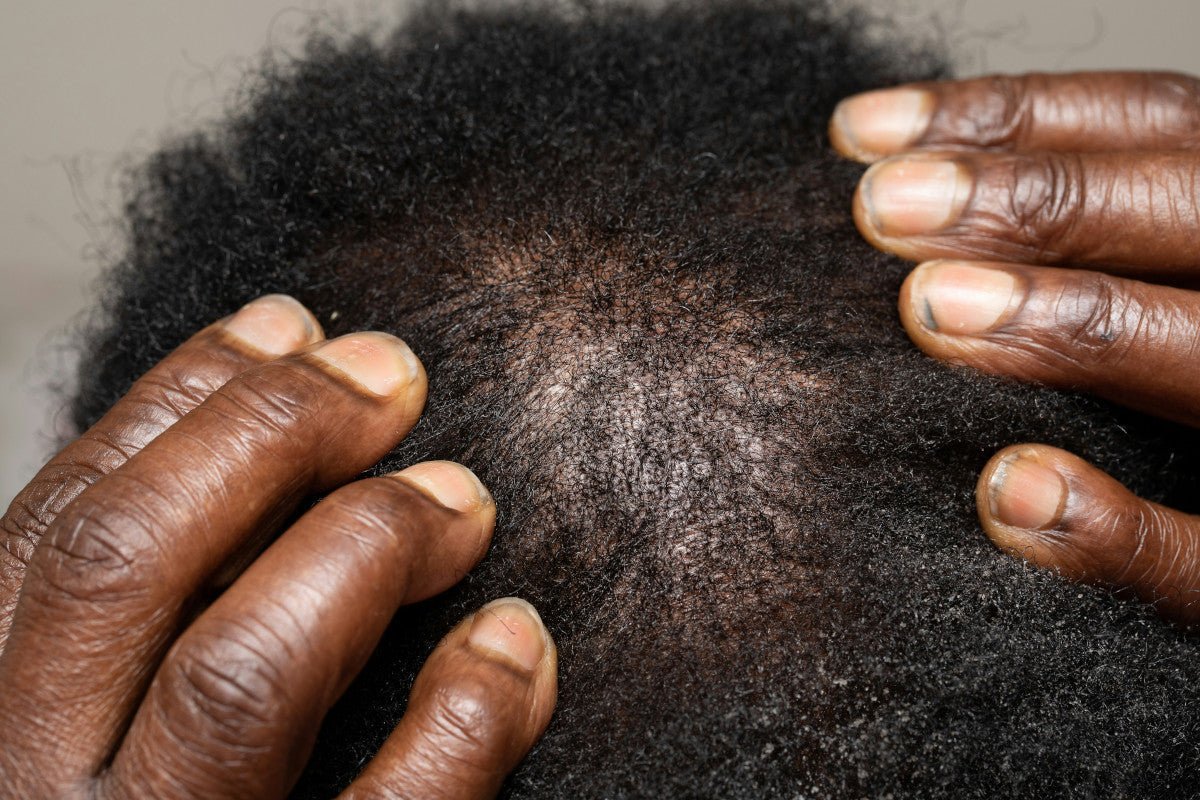
This chronic inflammatory condition affects as many as 16 million Americans. You know what it looks like already - that persistent redness, those visible blood vessels, and in some cases, small bumps across the cheeks, nose, chin, and forehead.
We don’t really know what causes rosacea yet. What we do know is that the immune system’s inflammatory response is involved to some extent. It can be triggered by so many things, too. It feels like you’re walking on eggshells to avoid flare-ups. Sun exposure, alcohol, spicy food, stress, and certain skincare ingredients can all be behind flare-ups.
This means living with rosacea requires you to 1) watch out for triggers and 2) support healthy skin barrier function. That second part is where copper peptides could be worth looking into.
Benefits of Copper Peptides For Rosacea: How Does GHK-Cu Help With Rosacea?
So does GHK-Cu help with rosacea? We want to be very clear - there isn’t a study out there showing this copper peptide can cure rosacea, or even treat it, for that matter. Rather, we’ve found the science shows it can help manage conditions like rosacea.
What we mean by that is copper peptides can encourage a better inflammatory response within the skin. And as you now know, rosacea flare-ups are an inflammatory response - whatever is causing the inflammatory response is irrelevant at that point.
A 2018 analysis found that GHK-Cu can modulate the expression of genes involved in inflammatory pathways - going as far as to suppress genes linked with overactive inflammatory signaling.1
Think about it this way. Rosacea involves a dysregulated inflammatory response. GHK-Cu supports the body’s natural ability to regulate that response.
There are more documented copper peptides skin benefits, too, specifically pertaining to the skin barrier. GHK-Cu has been shown to support collagen production and skin remodeling processes. This keeps the barrier strong and functional, so triggers can’t cross through as easily.2
Are Copper Peptides Safe For Rosacea?
So many products that you’d think are helpful in managing rosacea can actually be the source behind a flare-up. Fortunately, that’s unlikely to be the case with copper peptides - specifically, GHK-Cu.
Board-certified dermatologist Dr. Muneeb Shah says copper peptides are “gentle, well-tolerated and beneficial for supporting collagen and overall skin health.”3 The most commonly reported side effects are minor, temporary redness during the first few days.4 Nonetheless, we think it’s worth patch testing a new product on a small bit of skin before applying it over the whole face.
It’s also important that you’re using copper peptides in the right concentrations, though - somewhere between 1-2%. More is not extra effective; it may just trigger your rosacea.
What’s NOT in the formula matters just as much, too. Most rosacea flare-ups can be traced back to common irritants such as fragrance, alcohol, essential oils, and strong exfoliating acids. Brands are notorious for using these in their copper peptide formulas, so you need to scan labels with serious scrutiny.
Or, you can simply buy copper peptides for skin with peace of mind at PLU Laboratories. Our GHK-Cu serum (1%) only features two other peptides as active ingredients: Palmitoyl Tripeptide-1 and Palmitoyl Tetrapeptide-7. There’s a total of just six ingredients. None of them are known irritants.
Getting Started Using Copper Peptides For Rosacea
Even with a safe, minimalist formula like that we have in store for you at PLU Laboratories, you should exercise caution when using GHK-Cu for rosacea. Start slow:
- 2-3 drops on your fingertips, then massage into clean, dry skin for 30 seconds
- Start with one daily application (evening) for the first two weeks
- You can increase to both morning and evening after that if necessary
It’s best to avoid combining copper peptides with vitamin C (ascorbic acid) or strong exfoliating acids. They can not only increase the odds of sensitivity, but also get in the way of GHK-Cu fully penetrating the skin and getting where it needs to go.
Be sure to talk to your dermatologist if you already use prescription rosacea treatments (metronidazole, azelaic acid, ivermectin). They’ll be able to guide you on proper layering protocols.
PLU Laboratories
Visibly firmer-looking skin, no filler ingredients
Just 6 ingredients. 1% GHK-Cu with Palmitoyl Tripeptide-1 and Palmitoyl Tetrapeptide-7
Shop GHK-Cu Face TonicMore Ways to Manage Rosacea
Here are some more tips to go along with your copper peptides and rosacea protocol:
- Always wear sun protection. SPF 30 is the bare minimum. Ideally, use mineral sunscreen (zinc oxide or titanium dioxide). UV rays are the most common trigger for rosacea.
- Swap out harsh cleansers for something gentle. Fragrance-free, pH-balanced, no foaming sulfates or parabens. Minimalist is the way to go.
- Know your triggers. Whether it’s your notes app or a legit journal, jot down the things that cause rosacea to flare up. Alcohol, spicy foods, heat, stress, whatever. This helps you avoid them going forward.
Most importantly, don’t try to treat rosacea on your own. Get a dermatologist's helping hand. Copper peptides for rosacea are a great starting point, but they’re not a replacement for prescription treatments.
Frequently asked questions
Can I use copper peptides with rosacea?
Yes, with a few caveats. You need to make sure you’re using a topical that has a documented concentration so you don’t inadvertently overdo it and cause more harm than good. You should have a conversation with your dermatologist to confirm the product won’t get in the way of your existing treatment plan, too. That being said, using copper peptides for rosacea can be a great way to calm the sort of inflammatory response that causes flare-ups.
Which peptide is best for rosacea?
GHK-Cu is usually the best copper peptide serum for any sort of skin ailment. It has more evidence than any other peptide for skin, and a very strong safety profile. Ours here at PLU Laboratories has the perfect concentration with no filler or fluff ingredients that could get in the way of absorption or cause flare-ups.
What calms rosacea quickly?
Nothing topical can instantly calm an active flare-up, unfortunately. The priority is usually to avoid making things worse with other triggers. That’s unfortunately quite common. People rush to try new topicals at the first sign of redness, but they’re only pushing their skin further in the wrong direction.
Related Resources
AHK-Cu vs GHK-Cu | Can I use copper peptides with retinol?

PLU Laboratories
The direct route to firmer-looking skin
Just 6 ingredients. 1% GHK-Cu with Palmitoyl Tripeptide-1 and Palmitoyl Tetrapeptide-7
Shop GHK-Cu Face TonicReferences
- Pickart L, Margolina A. Regenerative and Protective Actions of the GHK-Cu Peptide in the Light of the New Gene Data. Int J Mol Sci. 2018;19(7):1987. PubMed
- Pickart L, Vasquez-Soltero JM, Margolina A. GHK Peptide as a Natural Modulator of Multiple Cellular Pathways in Skin Regeneration. Biomed Res Int. 2015;2015:648108. PubMed
- Shah M. Interview on copper peptides and GHK-Cu. PureWow. 2025. Source
- Pickart L. The human tri-peptide GHK and tissue remodeling. J Biomater Sci Polym Ed. 2008;19(8):969-988. PubMed

Written by Product Team