Do Topical Peptides Work?
You’re not alone if you’re skeptical. Do topical peptides REALLY work? Or is this just another trend that will come and go without ever really delivering real results?
The short answer is topical peptides absolutely work when applied topically. There’s ample evidence behind GHK-Cu and Palmitoyl Peptides specifically. They can help make your skin look firmer when applied at meaningful concentrations for a consistent period of time.1,2
The question is how do topical peptides work? We’re going to dig into the research below to help you fully appreciate the power of copper peptides for skin and hair.
Key Takeaways
- Topical peptides like GHK-Cu and Palmitoyl Peptides can support skin and hair appearance. 1,2
- The problem is most formulas bury the peptides with filler and fluff, so results fall short.
- It usually takes at least 6-8 weeks to see any sort of changes after consistent daily use.
- PLU Laboratories makes serums for hair and skin at meaningful concentrations so you can see the transformation you’re hoping for.
Understanding Peptides
Your body naturally makes these short chains of amino acids, which are responsible for triggering different cellular processes. The problem is, your body starts making them in lower and lower quantities as you age. This is when applying them topically comes into play.
We’re talking about signal peptides specifically for the context of this conversation. They talk to skin cells and facilitate more efficient processes, such as the necessary cell turnover and renewal cycles for firmer-looking, smoother-feeling skin.1
Do Topical Peptides Really Work?
So, do topical peptides work or not? Yes, with a handful of caveats.
First and foremost, not all peptides can work their way into the skin. Some are just too large to actually cross the skin barrier. Secondly, how well topical peptides work depends on the formula you actually end up using. Some brands load up their serums with fluff and filler that ultimately gets in the way of the peptides actually doing their job.
But let’s get more specific before we dig into the nuances of choosing a good peptide to apply topically - how do topical peptides work, exactly?
How Do Topical Peptides Work?
We mentioned earlier that signal peptides exist in your blood plasma right now. It’s just a matter of how much of it you have. The older you get, the less you have. That’s a big part of why aging is associated with looser skin, wrinkles, hair loss, etc.
Most evidence on the copper peptides skin benefits is specific to GHK-Cu.3 Studies suggest it can help jumpstart some of these processes that slow down over time. It encourages skin firmness and texture improvements.2
Then there’s Palmitoyl Peptides (Palmitoyl Tripeptide-1 and Palmitoyl Tetrapeptide-7). These peptides work through more or less the same mechanism - supporting the skin’s natural renewal processes to soften the appearance of fine lines.4
Potential Benefits of Topical Peptides
The two main reasons people turn to topical peptides are for improving the appearance and overall health of skin and hair. There is plenty of research on copper peptides for both benefits.
A study from the International Journal of Molecular Sciences shows that GHK-Cu modulates the expression of genes involved in skin remodeling - including those linked to collagen and glycosaminoglycan production.2 This is likely where the skin firming benefits come from.
A separate study (Robinson et al.) found that topical palmitoyl pentapeptide was able to improve photoaged facial skin over a 12-week span, helping to fade the appearance of sun spots, wrinkles, uneven texture, and even elasticity loss.4
You can even use copper peptides for hair, as one study found that a multi-ingredient formula containing Acetyl Tetrapeptide-3 performed as well as 3% minoxidil (the gold standard in hair loss treatment) in encouraging thicker, denser-looking hair.5
The Problem With Most Topical Peptides
The research is not just promising, but fairly conclusive - topical peptides work. Why do so many people have trouble getting results with them, then? Because they’re not using the right peptides for their specific goals - OR - they’re using a severely underformulated product.
The copper peptides can’t do their job effectively if they’re being drowned out by Vitamin C, hyaluronic acid, or other “supporting” cast members. Copper peptides need to be the star of the show. Yet, brands will tell you they include these ingredients for a more “well-rounded formula.”
We’ve found that the best results come from letting peptides work in isolation. That’s not to say you can’t still use vitamin C, or hyaluronic acid, or even things like retinoids. You just have to layer them separately.
Step one, though, is getting the best copper peptide serum.
PLU Laboratories
Visibly firmer skin, no filler ingredients
Just 6 ingredients. 1% GHK-Cu with Palmitoyl Tripeptide-1 and Palmitoyl Tetrapeptide-7
Shop GHK-Cu Face TonicWhich Peptides Should YOU Apply Topically?
There are three peptides in particular we think are worth adding to your skincare or hair care routine. It just comes down to what exactly you’re looking for.
GHK-Cu
This naturally occurring peptide has more evidence than all other topical peptides combined. It’s small enough to penetrate deep within the skin to encourage more efficient renewal and turnover processes.2,3
Our GHK-Cu serum collection comes in two formulas - one for hair; one for skin. Both feature GHK-Cu as the main active ingredient in meaningful concentrations, alongside supporting peptides (palmitoyl peptides for skin; acetyl tetrapeptide-3 for hair).
AHK-Cu
You may not hear as much about the AHK-Cu peptide, but it has a ton of potential as well. Specifically for hair. Our advice is usually to try GHK-Cu first just because it has so much more evidence. But if it doesn’t produce the results you want, try AHK-Cu next!
Palmitoyl Peptides
A dual-peptide complex of Palmitoyl Tripeptide-1 and Palmitoyl Tetrapeptide-7 can work wonders for skin that’s been battered by the sun and aging. They can improve texture and soften the appearance of fine lines, according to clinical studies.4 That’s why they’re included in our copper peptides for skin.
Starting Your Topical Peptide Regimen With PLU Laboratories
So, do topical peptides work? Yes. The only thing left to do now is see for yourself what’s possible with the right peptide formula, proper application, and a bit of patience.
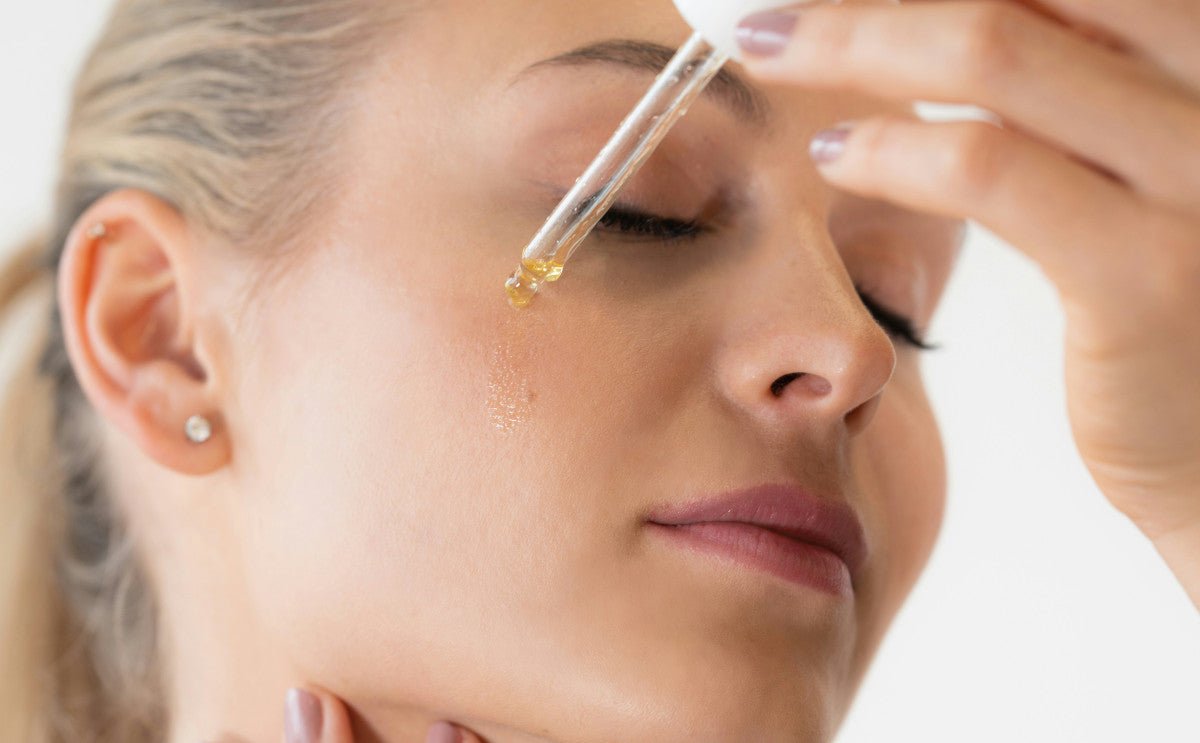
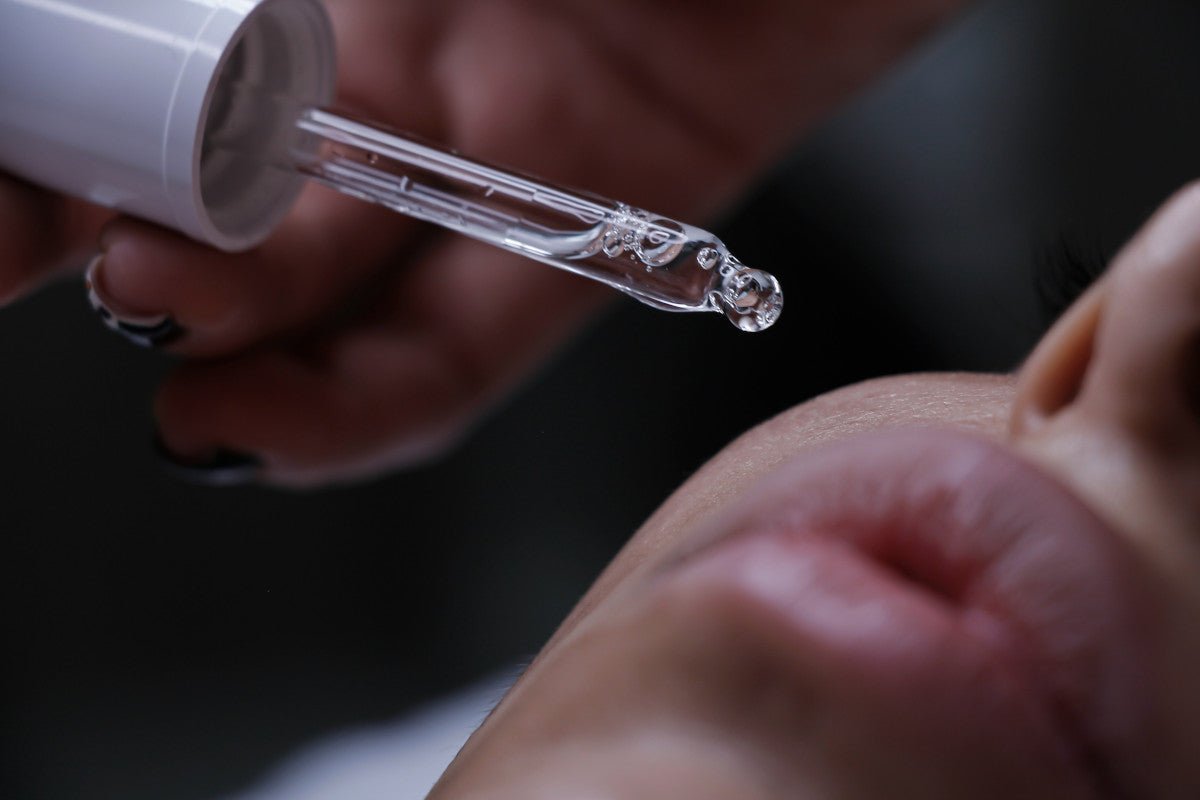
Pick the right formula from our catalog and incorporate it into your routine on a daily basis. It’s as simple as applying a few drops to clean, dry skin (either on the face or scalp, depending on what you’re using topical peptides for). Massage the formula in for 30 seconds.
Don’t expect an overnight transformation. It can take 6-8 weeks before you start noticing visible changes. But that’s because you’re helping shift your body’s natural processes. That takes time. Some people say they first noticed improvements in texture within 3-4 weeks. Others needed a full 8 weeks. Just be patient. It’ll be worth the wait!
Frequently asked questions
Can peptides be absorbed topically?
Yes, depending on the peptide, that is. Smaller molecules (like GHK-Cu, AHK-Cu, and palmitoyl peptides) can penetrate the skin to start working right where they’re needed most. This lets you be more targeted with your treatment and avoids the side effects and discomfort associated with needles. Learn more about GHK-Cu topical vs injection in our blog.
How do topical peptides work?
They talk to skin cells and encourage them to be more efficient in things like skin turnover, hair growth, etc. They don’t force any dramatic changes. They make your body work better.
What are the downsides of topical peptides?
They require patience. It can be frustrating waiting a full two months for a full transformation, but that’s really the only catch associated with applying peptides topically.
Which is better for aging skin, peptides or retinol?
Both have their place in supporting smoother, younger-looking skin. Copper peptides can do so without the harsh adjustment phase, though. This begs the question: can I use copper peptides with retinol? Yes - you just need to layer them correctly.
Related Resources
Can you use copper peptides with vitamin C? | GHK-Cu topical vs injection

PLU Laboratories
The direct route to firmer-looking skin
Just 6 ingredients. 1% GHK-Cu with Palmitoyl Tripeptide-1 and Palmitoyl Tetrapeptide-7
Shop GHK-Cu Face TonicReferences
- Gorouhi F, Maibach HI. Role of topical peptides in preventing or treating aged skin. Int J Cosmet Sci. 2009;31(5):327-345. PubMed
- Pickart L, Margolina A. Regenerative and Protective Actions of the GHK-Cu Peptide in the Light of the New Gene Data. Int J Mol Sci. 2018;19(7):1987. PubMed
- Pickart L, Vasquez-Soltero JM, Margolina A. GHK Peptide as a Natural Modulator of Multiple Cellular Pathways in Skin Regeneration. Biomed Res Int. 2015;2015:648108. PubMed
- Robinson LR, et al. Topical palmitoyl pentapeptide provides improvement in photoaged human facial skin. Int J Cosmet Sci. 2005;27(3):155-160. PubMed
- Lueangarun S, Panchaprateep R. An Herbal Extract Combination (Biochanin A, Acetyl tetrapeptide-3, and Ginseng Extracts) versus 3% Minoxidil Solution for the Treatment of Androgenetic Alopecia. J Clin Aesthet Dermatol. 2020;13(10):32-37. PubMed

Written by Product Team