GHK-Cu Topical vs Injection: Which is the Best Way to Take Copper Peptide?
GHK-Cu’s potential benefits have made it one of the most sought-after products in skin and hair care. However, the delivery method is just as important as the tripeptide itself. Choosing between GHK-Cu topical vs injection options makes all the difference for how effectively this copper peptide can reach your hair and skin.
Topical GHK-Cu poses fewer risks and provides targeted application to enhance the appearance of skin firmness and hair growth.
PLU Laboratories offers this option with our GHK-Cu serum, available at clinically-studied concentrations to help you bring out the best in your skin and hair routine with minimal time investment. Shop now!
GHK-Cu Peptide Injection vs Topical (Quick Comparison)
Before understanding the best way to take copper peptides, here’s how GHK-Cu injection vs topical options perform on important factors:
|
Factor |
GHK-Cu Topical |
GHK-Cu Injection |
|
Dose control |
Moderately precise (depends on amount applied + absorption) |
Highly precise (measured dose per injection) |
|
Application targeting |
Can be applied directly to a specific scalp or skin area |
Generally used for broader exposure rather than spot application |
|
Typical goal |
Skin/scalp-focused routines |
Broader “whole-body” peptide protocols |
|
Onset & consistency |
More variable; depends on skin barrier and routine |
Typically more consistent from dose to dose |
|
Convenience |
Easy at-home use; no needles |
Requires injection comfort and clean handling |
|
Safety & handling |
Lower handling risk; watch for skin sensitivity |
Sterile technique required; injection-site risks |
|
Cost profile |
Lower |
Higher |
Benefits of GHK-Cu For Hair, Skin, and More
If you’re deciding between GHK-Cu topical or injection options, it’s helpful to understand why this copper peptide has gained popularity for age management in the first place:
Hair Growth and Scalp Support
Research published in the journal Bioactive Materials suggests that GHK-Cu is potentially beneficial for hair and scalp health when applied topically. The tripeptide works by dilating the scalp’s blood vessels and stimulating follicle-related growth factors, leading to the appearance of hair growth and thickness.
Skin Firmness, Texture, and Visible Aging
According to the International Journal of Molecular Sciences, GHK-Cu’s small size and ability to bind to copper allow it to participate in copper metabolism, which may affect certain age-related processes in the body. This mechanism can enable the tripeptide to improve skin firmness and texture, helping unlock a more youthful appearance with regular use.
Post-Procedure and Skin Recovery Support
GHK-Cu is present in human plasma and can be released in the event of an injury. Research supports the idea that the tripeptide may help wound recovery through its antioxidant and tissue-remodeling properties.
These properties may also improve the appearance of post-procedure skin texture and enhance skin recovery upon topical application to affected areas after complete healing.
Connective Tissue and Whole-Body Repair
GHK-Cu was first discovered in human albumin in 1973, where it prompted old liver cells to function like younger cells. Since then, further research on the copper peptide has revealed its potential for increased production of connective tissue elements, such as collagen and elastin.
This may enable the tripeptide to play a role in whole-body repair by supporting vital enzymes that participate in connective tissue formation, antioxidant defense, and cellular respiration.
How Do You Take GHK-Cu?
There are two ways you can tap into the potential of this tripeptide: GHK-Cu topical vs injection methods. Injectables may have certain advantages, but potential risks make topical GHK-Cu a safe, effective alternative for those seeking appearance enhancement.
Topical Treatments
Topical GHK-Cu formulations deliver the tripeptide directly to the surface of your skin or scalp. This method has a lower risk profile and is one of the most common ways to use the tripeptide. In fact, human studies on GHK-Cu have mainly used the topical route of administration.
Furthermore, research confirms that GHK-Cu can penetrate the stratum corneum, the skin’s outermost layer, when properly formulated. This is the research-backed formulation that PLU Laboratories uses for our copper peptide serum, which can support skin and hair health.
Peptide Injections
GHK-Cu injections are used subcutaneously, and commonly require reconstituting powder with sterile water. Theoretically, injecting GHK-Cu can make the copper peptide more bioavailable to potentially boost collagen and provide other potential benefits.
However, there is a notable difference in the amount of research using GHK-Cu topical vs injection delivery methods. Injectable GHK-Cu is less documented in the scientific literature and requires more clinical studies to determine its safety and effectiveness.
GHK-Cu Topical vs Injection: Side-by-Side Comparison
Deciding whether to go for the GHK-Cu topical or injection method means understanding the pros and cons of each option. We’ll compare them side-by-side to help you make the right decision for your goals:
Dosing Precision and Control
Injections can offer more control and precision in dosing. This method allows you to draw a specific amount and know exactly how many milligrams are being administered.
So, between the two methods of delivering GHK-Cu, topical vs injection, injectables may be an appealing option for those seeking a rigid peptide protocol that involves specific doses and tracking.
Topical applications typically depend on how much of the product has been instructed for use. However, applying the same number of drops provides enough consistency to support skin and hair appearance. PLU Laboratories’ copper peptides for skin work by delivering clinical-concentrations of GHK-Cu directly to your skin, without any dilution from Vitamin C, hyaluronic acid, or botanical extracts.
Onset Speed and Consistency of Results
Injections bypass the skin barrier entirely and could theoretically provide more rapid systemic uptake. This may be a potential advantage of the delivery method as absorption could feel quick and consistent from dose to dose.
However, according to research published in the journal Acta Biomaterialia, about 95% of GHK-Cu injected into the dermis is metabolized and excreted from the body. Contrary to expectations, the tripeptide has extremely low bioavailability through injections.
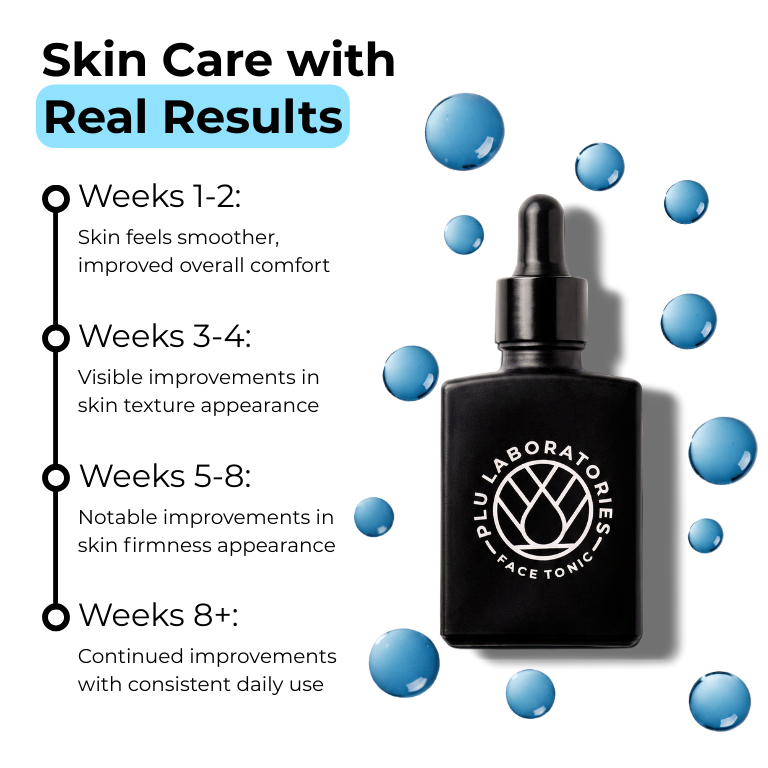
The onset speed for topical GHK-Cu shows visible improvements within 6-8 weeks of daily consistent use. Initial skin and hair improvements may even potentially show up within 1-2 weeks for some users.
When comparing GHK-Cu injection vs topical options, serums may show more consistency in results due to their easier absorption by the skin’s upper layer when applied as instructed, as suggested by research.
Typical Use Cases (Cosmetic vs Therapeutic)
Injections typically produce effects throughout the body, so they may be effective for whole-body peptide protocols in therapeutic contexts. However, it’s important to note that despite its prospects as an injectable treatment, GHK-Cu’s systemic effects are only supported by animal and in vitro studies.
Unlike injections, topicals provide a more targeted application, as they can be used directly on the skin and scalp surfaces. This makes topical serums well-suited for cosmetic use and a potentially valuable part of many professional skincare and hair growth products.
If you’re deciding between GHK-Cu topical vs injection methods to support your cosmetic goals, topical serums may provide a more effective option to treat specific areas on the skin and scalp.
Ease of Use and At-Home Practicality
Injecting GHK-Cu involves several steps and supplies. In clinical contexts, you need peptide vials lasting a minimum of 8 weeks, syringes, alcohol swabs, and bacteriostatic water.
On top of this, you have to track your doses, store your vials properly, and manage complete sterility throughout the process. Injectable GHK-Cu just aren’t that practical for most people evaluating GHK-Cu injection vs topical options.
In contrast, topical serums are a simple option for those chasing firmer-looking skin and hair thickness from home. GHK-Cu serums only need to be stored in a cool, dark place– ideally refrigerated, and then simply used on the desired area of the body. You don’t have to constantly inject yourself with anything, and that alone is a major point of distinction between a GHK-Cu injection vs topical.
The Safety Side of Things
While GHK-Cu itself has a good safety profile, administering the peptide via injections carries some risk. Firstly, improper sterilization techniques can lead to infections, and new syringes must be used in every event. Injection sites must also be rotated to prevent irritation and lipodystrophy, which causes fatty lumps on the body.
Even with all the appropriate precautions, injection site irritations such as redness, swelling, or pain are common. And let’s be honest - not everyone is comfortable injecting themselves with anything in the first place.
Topical GHK-Cu has been studied for decades and has a well-established safety profile in clinical research. It doesn’t require any specialized knowledge regarding its safe use, and is present in several cosmetic products on the market.
As a result, the disparity between safety profiles for GHK-Cu injection vs topical delivery methods is considerable.
Cost Over Time and Ongoing Commitment
Injectable GHK-Cu requires a significant financial commitment, as prices typically range from $239 to over $300 per vial, depending on dosage. You also have to buy bacteriostatic water, insulin syringes, alcohol swabs, and sharps containers. All of these costs can easily add up to over $1,000 to $2,000 or more over the year.
The cost and commitment comparison of GHK-Cu peptide injection vs topical methods conclusively favors its topical use. A high-quality GHK-Cu serum typically costs between $40 to $80. There are no additional supplies needed, nor any prescription fees. If used over the year, it costs approximately $300 to $500 total. This makes it both economical and practical for daily use.
So, Should You Go With a GHK-Cu Topical or Injection?
The answer to whether GHK-Cu topical or injection method is the right one for you should be clearer by now. All evidence indicates that topical GHK-Cu application is a better choice.
In contrast to injections, topical serums are cost-effective, practical, and have a good safety profile, in addition to providing potential benefits for hair and skin support. Topicals save time and don’t require specialized knowledge on the user’s part.
PLU Laboratories’ copper peptide serum, for instance, can be applied to the scalp in under 30 seconds, and fits seamlessly into any appearance routine.
Discover the Benefits of GHK-Cu With PLU Laboratories
PLU Laboratories is dedicated to scientific innovation in skin and hair care. Our GHK-Cu serums are available at research-backed concentrations that can support your cosmetic goals. In fact, many customers use both Face Tonic and Hair Tonic daily across their face and scalp for comprehensive peptide support.
PLU’s copper peptide serums can be applied in under 30 seconds, and can easily fit into any existing skin or hair routine. Explore our dual-peptide Matrixyl 3000 serum for help with the appearance of fine lines and skin firmness.
Final Thoughts on GHK-Cu Injection vs Topical
Comparing GHK-Cu topical vs injection options decisively favors topical application. While injectable GHK-Cu has prospects in specific therapeutic uses, it doesn’t have enough research to support its efficacy for skin or hair concerns.
Additionally, injections carry potential risks, such as infections, and require higher commitment on your end. In contrast, topical GHK-Cu application is convenient, has a good safety profile, and has clinical studies backing its cosmetic benefits.
Experience the benefits of GHK-Cu topicals with PLU Laboratories’ skin and hair serums, formulated at clinical concentrations to support visible improvements to your skin and hair appearance within 6-8 weeks.
Frequently asked questions
Can GHK-Cu penetrate skin?
Yes. Evaluating the delivery methods used for GHK-Cu, topical vs injection reveals that both methods can deliver the peptide to your skin tissues. However, injections are typically used for whole-body peptide protocols, while GHK-Cu topicals provide targeted application for cosmetic enhancement.
Will GHK-Cu work if I apply it topically?
Yes. Clinical research supports topical GHK-Cu’s efficacy for potential skin and hair benefits. Between the available options for using GHK, injection vs topical, topical applications are more common in professional skincare and hair products, and there are decades of research supporting their potential benefits for the appearance of skin firmness and texture.
Do you have to inject GHK-Cu peptide?
No, you don’t have to inject GHK-Cu to experience its potential benefits for your appearance. In fact, comparing the research using GHK-Cu peptide injection vs topical routes shows that the majority of clinical studies have utilized the topical option to research the efficacy of the copper peptide for cosmetic applications.
What's the best way to take GHK-Cu?
There are two ways to take the tripeptide GHK-Cu: topical or injection. However, a closer comparison reveals that topicals are the best way to take GHK-Cu in terms of safety, cost, practicality, and targeted application.
How long does it take for topical GHK-Cu to work?
Visible improvements in skin or hair appearance typically show up within 6-8 weeks of consistent use with topical GHK-Cu. For some users, subtle changes may even appear within 1-2 weeks of routine application. The timeline is almost comparable whether you choose GHK-Cu topical vs injection options, since research shows injected GHK-Cu has poor bioavailability.
Where can you get topical GHK-Cu?
You can explore topical GHK-Cu with PLU Laboratories’ research-backed serums that have been formulated at clinical concentrations. This undiluted product works with your body to enhance the appearance of skin firmness and hair growth.

Written by Product Team