AHK-Cu Dosage Guide
Most of the information you see regarding AHK-Cu dosage is actually borrowed from GHK-Cu research. AHK-Cu is a much newer peptide, but we already know that it has a ton of potential for hair.
We decided to create this guide covering AHK-Cu peptide dosage since we see so much misinformation out there on how it should be taken. Learn more about our new copper peptide serum below.
Fast Facts on AHK-Cu Dosage
- 1% topical AHK-Cu is the best-supported dose for hair.
- More is not inherently better. AHK-Cu may cause more harm than good past a certain concentration.
- There’s very limited research on AHK-Cu dosage specifically. Most of the recommendations you see online are extrapolated from GHK-Cu evidence.
- Injectable AHK-Cu has zero peer-reviewed safety or pharmacokinetic data. Stick with topical.
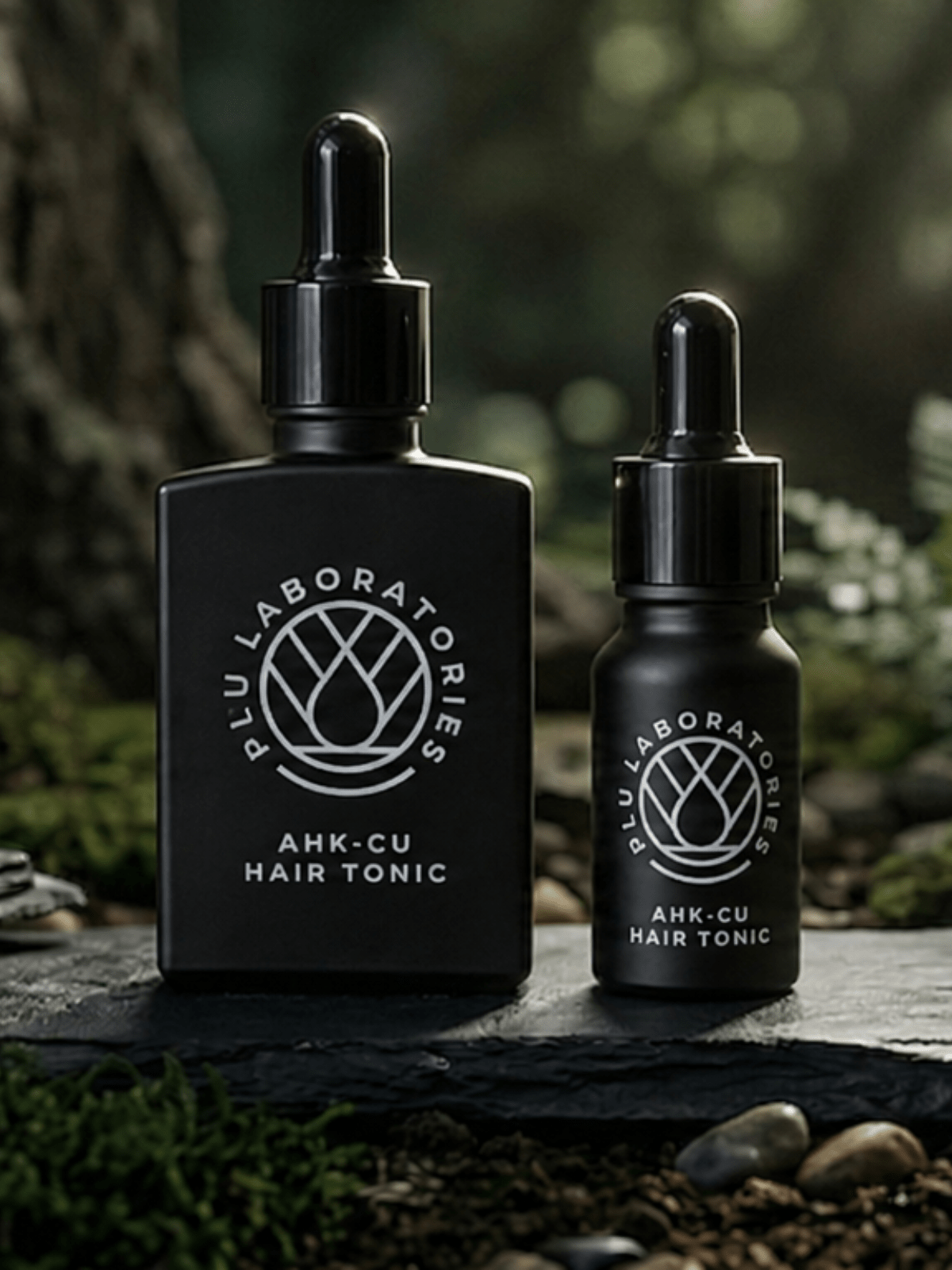
- PLU Laboratories makes a 1% AHK-Cu serum paired with 1% Acetyl Tetrapeptide-3 to support healthy hair from multiple angles.
What Does AHK-Cu Do?
AHK-Cu is short for alanine-histidine-lysine copper. It’s sometimes called Copper Tripeptide-3. Whatever you refer to it as, this synthetic copper peptide does not occur naturally in the human body like its better-known counterpart, GHK-Cu.
Rather, this copper peptide has been specifically engineered to improve how thick your hair looks. Chemists create it in a lab by swapping glycine with alanine in the tripeptide sequence. This is the difference between AHK-Cu vs GHK-Cu in a nutshell.
We only have one peer-reviewed study on AHK-Cu right now because people are just starting to realize how powerful it is. We expect to learn a lot more about it over the coming years.
In the meantime, though, we refer back to the evidence brought forth from a 2007 trial at Seoul National University's Department of Dermatology. AHK-Cu was tested on 240 human hair follicles and dermal papilla cells.1 The results showed AHK-Cu supports follicle growth through more than one pathway:
- Reduced apoptosis marker PARP by 77.5%
- Cut cleaved caspase-3 by 42.7%
- Upregulated VEGF for blood supply to follicles
- Suppressed TGF-beta-1 (a signal linked to premature hair cycle interruption)
We know a lot of that doesn’t mean much if you don’t have a biology degree. But the key takeaway is that AHK-Cu is a promising area of hair research. All of the AHK-Cu benefits are contingent on nailing dosage, though.
What’s the Optimal AHK-Cu Dosage?
It’s hard to say with a high level of certainty what AHK-Cu dosage you should take without knowing more - how are you taking it? What concentration are you taking it in? What exactly are you taking it for? Let’s take a closer look at all the moving pieces below.
General Guidelines
The simplest way to incorporate AHK-Cu into your haircare routine is through a clinically-formulated serum using somewhere between 0.5%-1% concentration. That aligns with the concentrations used in dermal papilla cell models.
We can refer back to the 2007 Pyo study for more insights, too. It found a sweet spot for AHK-Cu peptide dosage. Concentrations between 10-12and 10-9 M helped lengthen hair follicles. But anything over 10-7 M inhibited it.1
The key takeaway: more is not better with AHK-Cu. There’s a fine line between providing your follicles with the support they need to thrive and overdoing it, ultimately causing more harm than good.
This is important because it would be natural to assume a hair serum containing 2% AHK-Cu would outperform one that only contains 1% AHK-Cu. The Pyo data above suggests the opposite to be true, though.
Dosing AHK-Cu for Hair Growth
We have a feeling you’re most interested in AHK-Cu for hair growth, and that’s the use case real clinical evidence is done in regards to. It’s also why we formulated our AHK-Cu peptide specifically for hair.
PLU Laboratories pairs 1% Copper Tripeptide-3 with 1% Acetyl Tetrapeptide-3. 1:1 ratio. Acetyl Tetrapeptide-3 has strong evidence for supporting extracellular matrix structure around hair follicles, which is why it earned a spot in our formulation.2
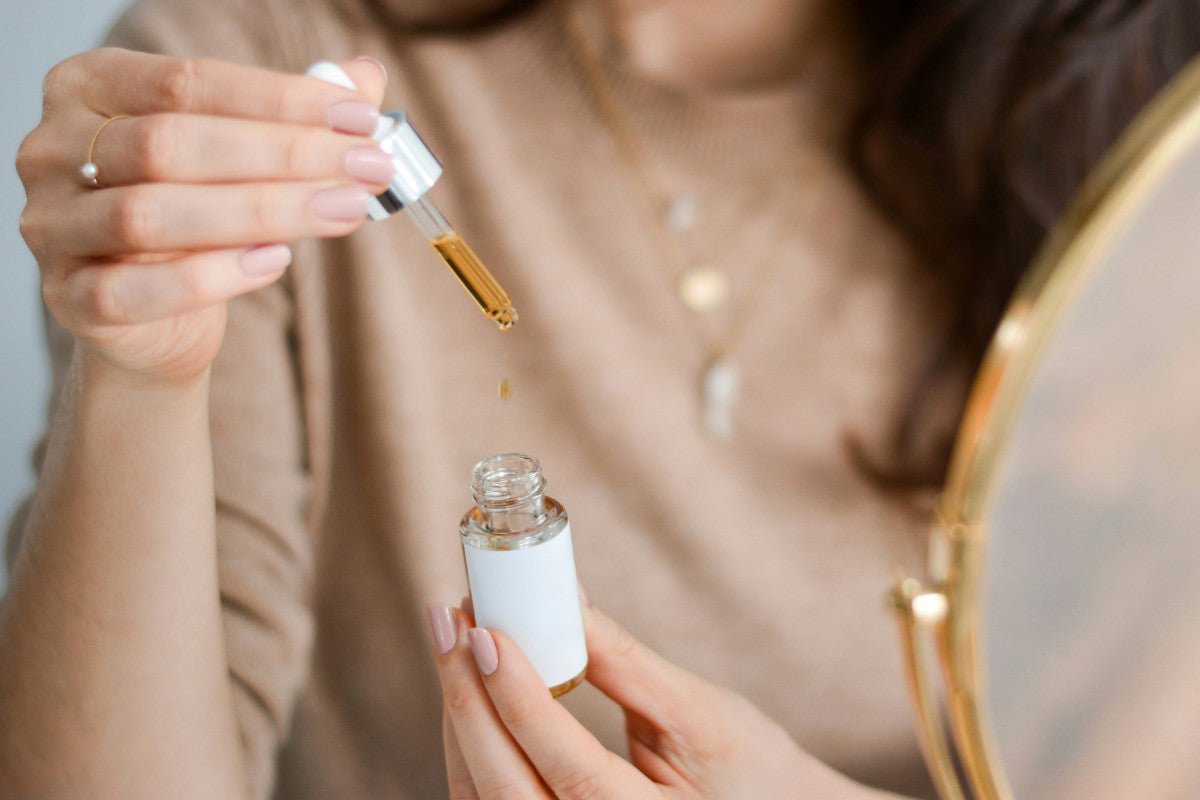
This serum is the easiest way to use AHK-Cu for thicker-looking hair. You just apply 2-3 drops right onto the scalp. Massage the serum in for 30 seconds or so. Let it absorb. It’s that simple.
Dosing AHK-Cu for Skin
Although there isn’t any published research on AHK-Cu for skin, there’s a lot of buzz around this copper peptide for skin health, too. Personally, we advocate for using GHK-Cu for skin support. It’s the copper peptide with documented evidence for improving skin firmness, minimizing the look of fine lines, and improving overall texture.
That said, AHK-Cu appears to have benefits for skin as well. Some of the AHK-Cu skin serums we evaluated use 0.3-1% AHK-Cu. This mirrors the clinically effective concentrations of GHK-Cu, so we can understand how brands arrived at this concentration. Both peptides chelate copper and share two out of three amino acids.
Just know that there isn’t any peer-reviewed study testing AHK-Cu on skin cells or even in human skin models. You should stick with a GHK-Cu serum.
Dosing AHK-Cu for Wounds
Similar to skin support, all the data published on copper peptides and wound healing is specific to GHK-Cu. This better-known copper peptide was found to play a pivotal role in wound repair across multiple studies in a 2015 Review conducted by BioMed Research International.3
This is to say that taking GHK-Cu dosing guidance for wounds and extrapolating it for AHK-Cu dosing is a mistake. We cannot endorse using AHK-Cu for wound healing until science supports it. Everything we see right now is mere speculation.
PLU Laboratories
Thicker-looking hair, no filler ingredients
Just 5 ingredients. 1% AHK-Cu with 1% Acetyl Tetrapeptide-3
Shop AHK-Cu Hair TonicFactors Influencing Your AHK-Cu Dose
There are a couple of variables to account for with your AHK-Cu dose beyond what you’re using it for. These are all personal factors specific to YOU.
Age
Your body already makes copper peptides - albeit, not AHK-Cu. But at any rate, natural copper peptide production plummets with age. Even though AHK-Cu isn’t the one that exists in your body right now, the cellular receptors it interacts with are the same ones that become less responsive as you grow older.
But this isn’t to say you need more AHK-Cu the older you get. Just that you should set your expectations on how quickly you see results from AHK-Cu. We want to caution you against taking a higher AHK-Cu peptide dosage for the sake of “speed” or “efficacy.” Remember, you may end up having the opposite intended effect by overdoing the AHK-Cu dosage.
Body Weight
Body weight is irrelevant as it pertains to topical AHK-Cu dosing. This is something that comes up when it comes to injectable peptides, since these distribute the AHK-Cu systemically. That’s where body weight matters, as it directly affects blood plasma concentration of copper peptides.
That being said, calculating an AHK-Cu injection dosage is guesswork without any published pharmacokinetic data for injectable AHK-Cu. The better-known copper peptide, GHK-Cu, was actually just placed on a new FDA regulation list for injection because even it is shrouded in too many uncertainties.
Gender
We see some sources claiming there are different AHK-Cu dosage guidelines for men and women. But we don’t know where this idea is coming from, as it wasn’t referenced whatsoever in the one study on AHK-Cu. Take any recommendations that reference gender with a grain of salt.
Concentration
This is really the most important piece of information with AHK-Cu dosing. How concentrated is it? Going back to the limited evidence we have, it was clear that the peptide promoted hair growth at low concentrations and actually slowed it at higher concentrations.
Long story short, utilize a 1% formulation. That’s the effective range where AHK-Cu can encourage thicker-looking hair. Don’t make the mistake of thinking more will speed up (or boost) results in any way.
Tips on Incorporating AHK-Cu Safely
We have a full guide on how to use AHK-Cu, but it’s actually quite simple. Here are some tips:
- Start with one daily application. You can apply it twice a day after a few weeks if you are tolerating AHK-Cu well.
- Always apply copper peptides to clean, dry skin - that advice extends to your scalp as well. Wet hair will dilute the topical concentration and could negatively affect absorption.
- Don’t combine AHK-Cu (or any copper peptides, for that matter) with acids such as vitamin C, AHAs, or BHAs. Acids can dismantle the copper-peptide bond and prevent absorption.
- 2-3 drops is plenty (for PLU Laboratories Hair Tonic). Do not use more and hope for faster, better results. Consistency and patience matter more than anything else.
Do You Take AHK-Cu Permanently or Cycle Off?
You’ll see guidelines for cycling AHK-Cu in peptide forums online. As you probably already know, though, those recommendations are specifically for injecting the peptide. That’s not what we recommend. All the advice we share on our website is specific to topical application.
There is no published research suggesting you need to taper off AHK-Cu on a set schedule. We’ve made it a point to ensure our serum is a safe long-term addition to your hair care routine. You are unlikely to experience any sort of adverse effects from sticking with AHK-Cu for months or even years at a time without a break.
The one case in which you may want to cycle off AHK-Cu is if you notice any sort of discomfort or irritation. This is uncommon. Otherwise, stopping usage just means putting the copper peptide benefits on pause, so to speak. Stick with it!
Injecting AHK-Cu vs Topical Application
We’ve talked a lot throughout this AHK-Cu dosage guide about how we advocate for topical application over injectable copper peptides. The reason being, the FDA just reclassified GHK-Cu as Category 2. Injectable AHK-Cu sits in an even grayer zone since we know very little about it in any delivery format, let alone injections.
Any sort of injectable peptide protocol calls for strict medical oversight. You’ll be given tailored AHK-Cu injection dosage guidelines based on your health status and body weight. Trying to come up with your own protocol is unsafe, no matter what those guys in the peptide forum say.
On the other hand, topical AHK-Cu is generally well tolerated. Side effects are uncommon, and usually temporary and mild. We’ve seen some complaints about minor skin irritation, but this subsides within a few days most of the time. It was usually the result of applying too much, too soon.
More importantly, though, you’re probably using AHK-Cu for hair growth. Why wouldn’t you want to apply it right where you actually need it - the scalp? Injecting AHK-Cu means it goes through your entire system. A lot less of the copper peptide actually makes its way to your hair follicles.
What Can You Pair AHK-Cu With For Optimal Results?
AHK-Cu is powerful, but it’s just one piece of the puzzle for healthy hair growth. You can complement its performance with a range of ingredients that work through alternative pathways, such as:
- Acetyl Tetrapeptide-3: There’s a reason we include this peptide alongside AHK-Cu in our serum at PLU Laboratories. Research suggests it supports extracellular matrix protein synthesis around the hair follicle. This is the scientific way to say it may help build the shield around your hair follicles that anchors them in place.
- GHK-Cu: Yes, most research is specifically done on its skin-supporting benefits. But we also have a copper peptide hair serum powered by GHK-Cu because a healthy scalp is the foundation for healthy hair growth!
- Minoxidil: This is the most well-known hair loss drug in the world, and we actually have an entire resource comparing AHK-Cu vs minoxidil. Minoxidil works through vasodilation, which is very different from the way in which AHK-Cu signals to cells. You can apply them at different times of day if you use both.
Setting Your Expectations With AHK-Cu
AHK-Cu can be a great addition to your daily ritual if you’re looking for a gentle way to encourage stronger, thicker-looking hair. But we said it throughout this guide, and we’ll say it once more - we still don’t know a ton about the full potential of AHK-Cu for hair growth.
That’s not to say it’s not worth trying. Here’s what a few of our customers have said about adding our AHK-Cu tonic to their routine:
“Early results are promising, seeing baby hairs sprout up.” - Peter
“Fantastic products. Great quality. Highly recommend for anyone looking for thicker fuller hair!” - David
“Looking good so far! Only a month in and i see some progress.” - Anthony
However, you need to remember that hair growth, in general, is a slow burn. It can take at least 2-3 months before you see the early signs of improvement. Maybe even longer. This is something you need to commit to for the long haul. Don’t check the mirror after the first week expecting to see a big change.
Be patient, though, and you’ll be glad you took a chance on AHK-Cu.
Parting Thoughts on AHK-Cu Peptide Dosage
We hope this AHK-Cu dosage guide has cleared up some of the many misconceptions surrounding this lesser-known copper peptide. It’s bursting with potential. But a lot of what you’ll see in forums online is 1) anecdotal evidence and 2) specific to injectable peptides.
The one word of advice we want to leave you with is that more is not better when it comes to the AHK-Cu peptide dosage. Stick with the 1% concentration, 2-3 drops per application, and give it time to work its magic.
Frequently asked questions
How much AHK-Cu should I take?
2-3 drops of a 1% topical serum applied to the scalp, every single day.
Does it matter when I use AHK-Cu?
Nope - consistency is the only thing that matters. We prefer to apply AHK-Cu serum at night, but you can do it in the morning if that’s a better routine. Just make sure you do it every day!
What happens if I skip a day?
You’re not completely derailing your results. But you’re selling yourself short on the benefits of AHK-Cu for hair. It takes time, so do your best to stay consistent day in, day out. DO NOT double up on the AHK-Cu dosage to compensate.
Do men and women need the same amount of AHK-Cu?
Yes. There’s no published research or any real reason to believe you’d need to use less or more of an AHK-Cu topical serum because you’re a guy or girl. Injectable AHK-Cu is a different story, and we can’t speak to that.
Is it safe to stack AHK-Cu with other peptides?
Yes - in fact, we do this already with our newer formulation - the Copper Peptide Hair Tonic with AHK-Cu and Acetyl Tetrapeptide-3. You get 1% of both peptides.
Do I need to titrate AHK-Cu?
No, you can dive right in with a 1% concentration for topical serums. Just start with one application a day for the first 2 weeks or so. Then, you might consider doing a second application a day if you don’t experience any adverse reactions.
When should I stop using AHK-Cu?
Only if you deal with scalp irritation, redness, or itching that doesn't go away on its own. Stop and talk to a dermatologist. Or, double-check the instructions and make sure you weren’t doing something wrong. A lot of side effects from topical AHK-Cu can be traced back to user error.
What should I do if I notice side effects from AHK-Cu?
Stop right away. This is rare. Give your scalp 3-5 days to recover and then try again. You may find that mild redness is normal in the first few days, but it shouldn’t get worse - and it should go away on its own.
Is a high dose of AHK-Cu better?
No - this is a common misconception on the AHK-Cu dosage. Stick with the 1% concentration and only apply 2-3 drops at once. There’s no benefit in upping the dose, only potential adverse reactions.

PLU Laboratories
The direct route to fuller-looking hair
Just 5 ingredients. 1% AHK-Cu with 1% Acetyl Tetrapeptide-3
Shop AHK-Cu Hair TonicReferences
- Pyo HK, Yoo HG, Won CH, Lee SH, Kang YJ, Eun HC, Cho KH, Kim KH. "The effect of tripeptide-copper complex on human hair growth in vitro." Archives of Pharmacal Research. 2007;30(7):834-839.
- Loing E, Lachance R, Ollier V, Hocquaux M. "A new strategy to modulate alopecia using a combination of two specific and unique ingredients." Journal of Cosmetic Science. 2013;64(1):45-58.
- Pickart L, Vasquez-Soltero JM, Margolina A. "GHK Peptide as a Natural Modulator of Multiple Cellular Pathways in Skin Regeneration." BioMed Research International. 2015;2015:648108.

Written by Product Team