






Copper Peptide Face Tonic with GHK-Cu and Palmitoyl Peptides
Key Benefits
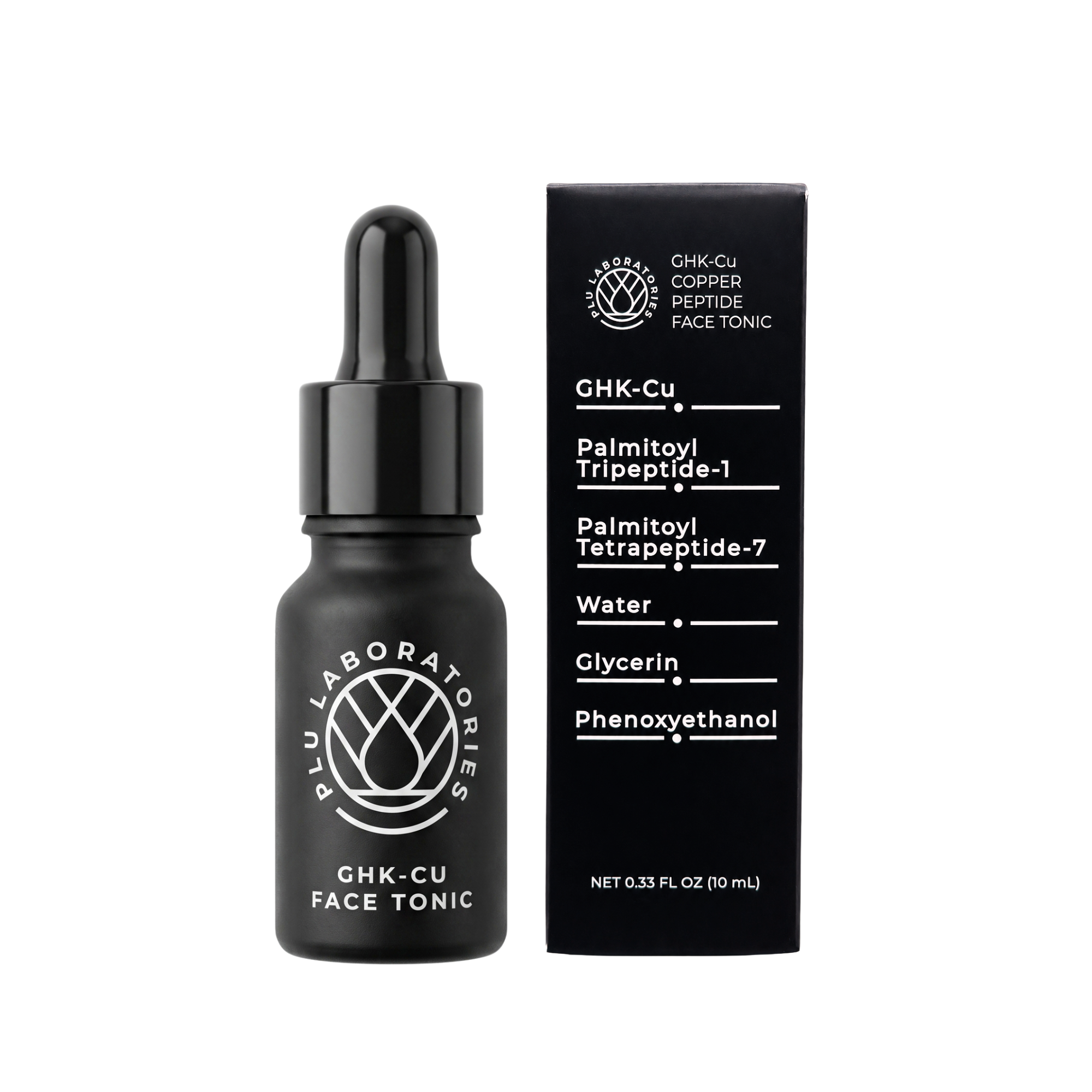
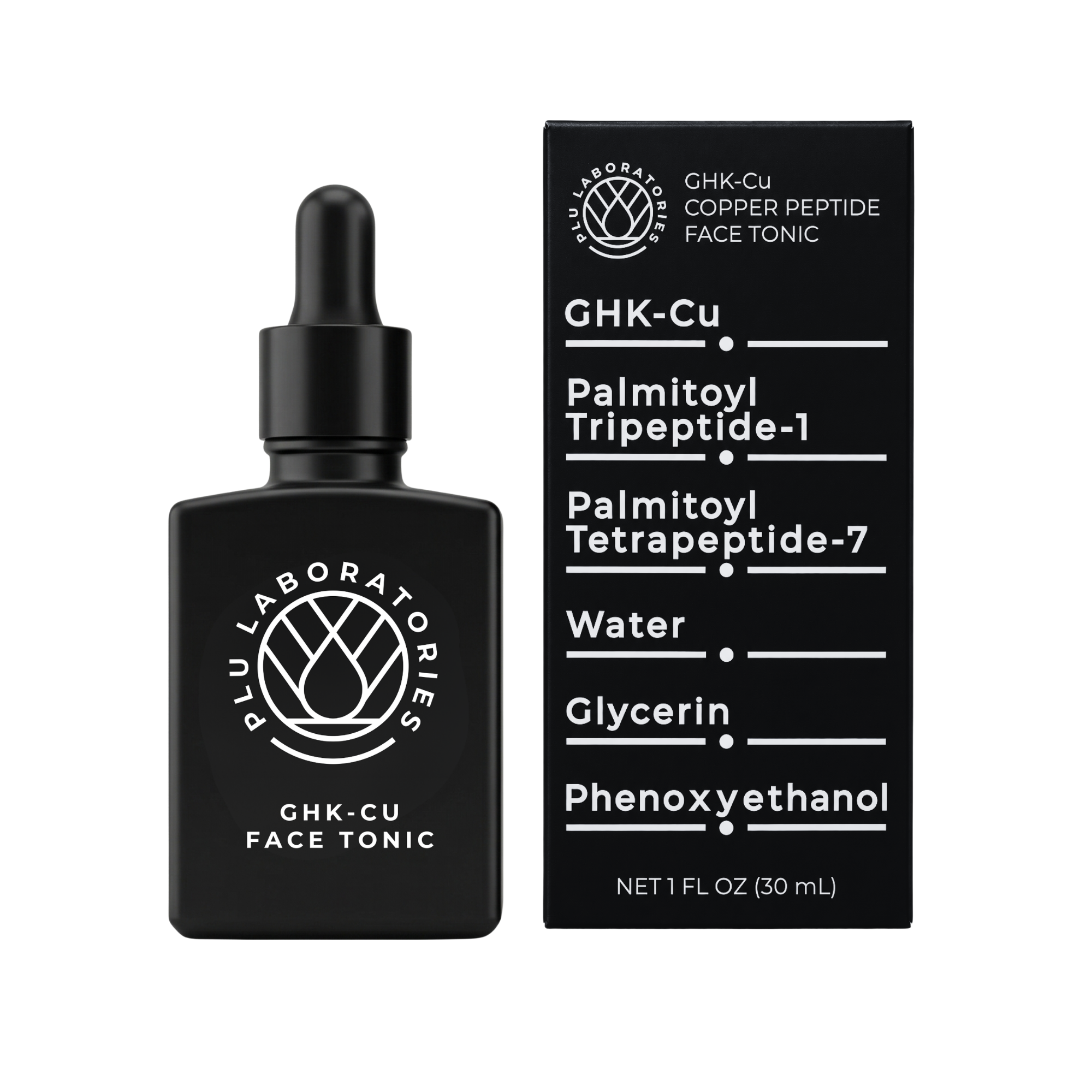
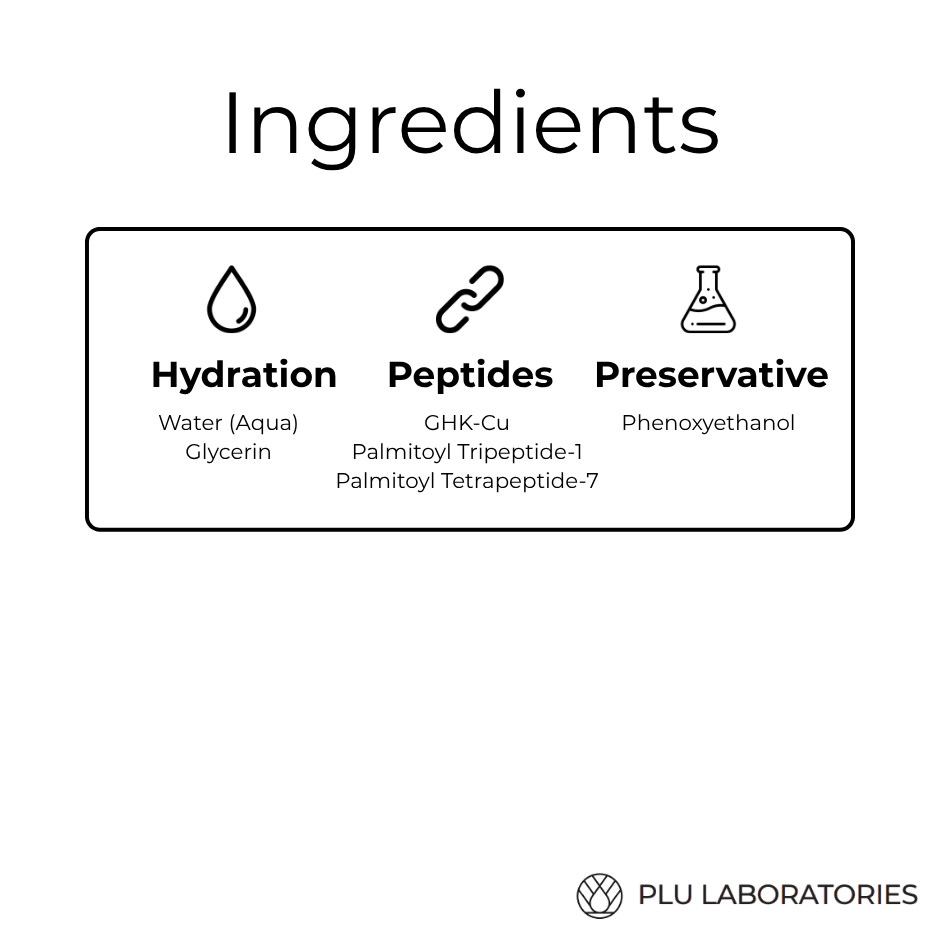
Just 6 Ingredients. Nothing Hidden.
GHK-Cu. Palmitoyl Tripeptide-1. Palmitoyl Tetrapeptide-7.
Water. Glycerin. Phenoxyethanol.
Three clinically studied peptides. Three carriers to deliver them. No fillers, no botanicals, nothing added for marketing appeal.
Visible results typically appear within 6-8 weeks of consistent daily use. Individual results may vary.
Ships within the United States. Also available on Amazon.com

Choose options
Independently Tested
Third-Party Lab Verified
All products and active ingredients are tested by an independent research lab at University of Illinois at Chicago. Complete verification, from raw actives to finished product.
See latest test results +

Three peptides. One job.
GHK-Cu supports the skin's natural collagen pathways for firmer-looking skin. Palmitoyl Tripeptide-1 and Palmitoyl Tetrapeptide-7 help improve how fine lines and skin texture appear over time.

Everything you need. Nothing you don't.
No parabens. No sulfates. No silicones. No artificial fragrances. Nothing added for marketing appeal.
30 seconds. Morning and night.
Cleanse. Apply 2-3 drops to face and neck. Let it absorb for 60 seconds, then layer the rest of your routine.
- Water Carrier
- Glycerin Carrier
- GHK-Cu 1% Copper Tripeptide-1, for skin firmness appearance
- Phenoxyethanol Preservative
- Palmitoyl Tripeptide-1 Signal peptide, for fine lines appearance
- Palmitoyl Tetrapeptide-7 Signal peptide, for skin texture appearance
That's it.
Full ingredients (INCI): Water, Glycerin, Copper Tripeptide-1, Phenoxyethanol, Palmitoyl Tripeptide-1, Palmitoyl Tetrapeptide-7
What to Expect From Our Copper Peptide Face Serum
Weeks 1-2
Skin feels smoother with improved texture and comfort
Weeks 3-4
Visible improvements in skin tone evenness and firmer appearance
Weeks 6-8
Notable reduction in fine lines with improved elasticity
Weeks 8-12
Skin texture continues improving, fine lines less prominent
Weeks 12+
Ongoing support for firmer, smoother skin with daily use
Individual results may vary. Research on copper peptides, Palmitoyl Tripeptide-1, Palmitoyl Tetrapeptide-7, and Acetyl Tetrapeptide-3 noted visible improvements within study timeframes with consistent use of peptide complexes.
Simple by design.
Two working peptides, a few carriers, and nothing added for the label. That
Six ingredients or fewer
Two peptides and three carriers, every time. You can read and pronounce every one.
Nothing hidden
No hyaluronic acid, vitamin C, or botanical filler. Layer those yourself if you want them.
Made in the USA, 30-day returns
Formulated and produced domestically, backed by a 30-day money-back guarantee.
Our copper peptide face serum vs a leading competitor
That's it.
How to Use Copper Peptides for Face
A simple daily routine for copper peptides:
- Start by washing your face and patting it dry
- Put a few drops of the serum on your fingertips and gently massage your face and neck
- Give the serum 30 seconds to absorb, with no residue or greasiness
- Follow up with any other skincare products in your routine, such as moisturizer, sunscreen, or retinol serum
Use morning and/or night for the best results. Consistency is key to making the most of copper peptides for face. Do not miss any days or you may delay results.
Example Routines
Morning Routine
Face wash → Face Tonic → Sunscreen
Optional: add vitamin C or hyaluronic acid between Face Tonic and sunscreen
Night Routine
Face wash → Face Tonic → Moisturizer
Optional: add retinol serum or other products
Turn Back Time With Copper Peptides for Skin For a Firmer, More Youthful Appearance
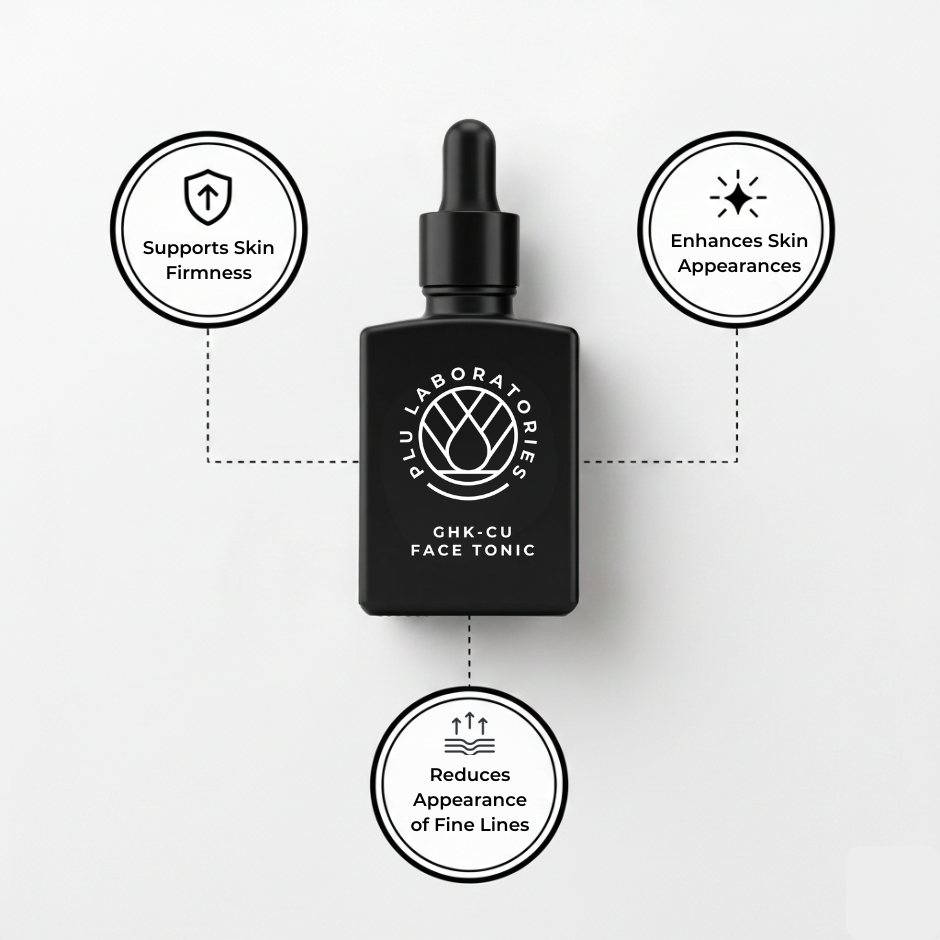
This Palmitoyl Peptides serum pairs Palmitoyl Tripeptide-1 and Palmitoyl Tetrapeptide-7, a dual-peptide complex known for supporting skin cell communication and minimizing the appearance of fine lines. We've included GHK-Cu (copper peptide complex) because it can support the skin's natural collagen pathways. Potential benefits of our copper peptides for face:
- Supports Skin Firmness: GHK-Cu copper peptide supports skin's natural collagen pathways for firmer-looking skin appearance
- Reduces Appearance Of Fine Lines: Palmitoyl Tripeptide-1 and Palmitoyl Tetrapeptide-7 help improve how fine lines and skin texture appear over time
- Enhances Skin Appearance: Helps retain moisture and even out skin tone for a refreshed, healthy-looking complexion
Our copper peptide serum is formulated to match published research, and customers are seeing visible improvements in skin firmness and fine lines in as little as 1-2 weeks. Weeks 4-8 are when you'll notice the more dramatic transformation in your skin's appearance, though.
Product Details & Safety Information
Size Options:
10 mL (0.33 fl oz) or 30 mL (1.0 fl oz)
Usage Period:
6 months after opening
Made in the USA of Domestic and Globally Sourced Ingredients
For External Use Only
Avoid contact with eyes. Discontinue if irritation occurs.
Distributed by:
PLU Laboratories
Prospect Heights, IL 60070
Frequently Asked Questions
Are copper peptides good for the face?
Yes, and there’s plenty of research to support using copper peptides for skin. These formulas can encourage firmer-looking skin and a smoother texture.
What do copper peptides do for your skin?
They’re signaling peptides that help skin cells communicate effectively. This translates to improvements in the appearance of fine lines, elasticity, and overall skin tone over time.
What skin types react badly to copper peptides?
None! Copper peptides are generally considered safe for all skin types and ages. Although copper peptides for face are most commonly associated with mature skin concerns, they can be beneficial for anyone looking to keep their skin firm and supple, preventing early signs of aging.
Can you put moisturizer over copper peptides?
Yes - in fact, you should. It’s just important to make sure you’re following the proper order. Copper peptides go on the face first, and need to be given 30-60 seconds to absorb. THEN you can layer on your moisturizer or other skincare ingredients.
How long does it take to see results from copper peptides for face?
You might notice early signs of improvement within the first few weeks. Most users start to see more dramatic transformations around 4-8 weeks, though. Give it a full 12 weeks before making any decisions about whether or not to continue use. Like copper peptides for hair, patience and consistency are key!
Can I use copper peptides daily?
You need to use them daily for the best results. Consistency is key. A lot of our customers actually use copper peptides on the face twice daily.
What should you not mix copper peptides with?
There aren’t any ingredients known for causing adverse reactions with copper peptides for skin. You should apply our Face Tonic first, though, and let it absorb for up to a minute. Then you can follow up with other products like hyaluronic acid, vitamin C serum, or moisturizer.
Can I use copper peptides for face if I have sensitive skin?
Yes. our formula is free of common irritants like parabens, sulfates, silicones, or artificial fragrances. However, as with any new skincare product, we recommend patch testing on a small area first. You may want to ask a dermatologist before using our copper peptides for skin if you have a known skin condition, too.
Are copper peptides better than retinol?
Not necessarily better - different. Retinol targets surface renewal, while copper peptides are often used for firmness and conditioning. There’s room for each in your routine.
When do I actually use copper peptides for skin?
We recommend applying twice a day - first thing in the morning and then again before bed. Or, you can simplify the routine with just nightly application. What matters most is you’re using copper peptides on your skin daily.
From the PLU blog
Is GHK-Cu Safe? What Dermatologists Say About the GHK-Cu Safety Profile and Risks
It’s no longer a secret. Copper peptides like GHK-Cu can work wonders for your skin and hair. But is GHK-Cu safe? We get asked this all the time as the most trusted source on copper peptides for sk...
Read more
Can You Use Copper Peptides With Tretinoin?
Tretinoin is one of the most powerful retinoids for treating acne, sun damage, or fine lines - among many other skin concerns. But you’ve probably heard all the buzz about copper peptides, and now ...
Read more
Most of the information you see regarding AHK-Cu dosage is actually borrowed from GHK-Cu research. AHK-Cu is a much newer peptide, but we already know that it has a ton of potential for hair. We d...
Read more